A practical guide to identifying, grading, and storing stamps safely from a truck cab, using rest stops and a compact tool kit instead of a full desk setup.
Published
Quick answer
The best stamp collecting tips for truck drivers focus on protecting paper from cab heat and light, keeping a compact tool kit, and using rest stops to identify and catalogue stamps with a phone instead of a full desk setup.
Key takeaways
- Keep stamps off the dashboard and out of direct sun; heat loosens hinge and gum adhesive fast.
- A small kit—tongs, loupe, perforation gauge, UV lamp—covers grading from any cab.
- Store loose finds in glassine envelopes, then move them to a stockbook or hingeless album once identified.
- Use rest stops to photograph and identify stamps before logging catalogue numbers.
- Silica packets in a sealed bin keep humidity stable across routes through different climates.
Good stamp collecting tips for truck drivers start with the two things the road fights hardest: stable temperature and dedicated space. Get those two right and the rest of the hobby—identifying, grading, cataloguing—works the same from a cab as it does from a desk.
Why does truck driving suit stamp collecting?

Collecting stamps while truck driving works because long-haul routes produce exactly the kind of unstructured waiting the hobby rewards: fuel stops, mandated rest breaks, loading dock delays. A stockbook and a loupe take up less room than a paperback, and sorting a few envelopes while a trailer is being loaded is a genuine break from the cab.
Route variety helps too. Drivers who run regional lanes pass through post offices, truck stops, and estate sales in dozens of towns a month, which means more chances to turn up loose stamps, old covers, or a box lot at a flea market than most collectors get sitting at home all year.
How do you store stamps safely in a truck cab?
Good stamp storage for truckers means keeping paper out of a cab's worst zones rather than buying a fancier album. A cab bakes in the sun, cools overnight, and vibrates constantly on the highway, and none of that is kind to paper or gum.
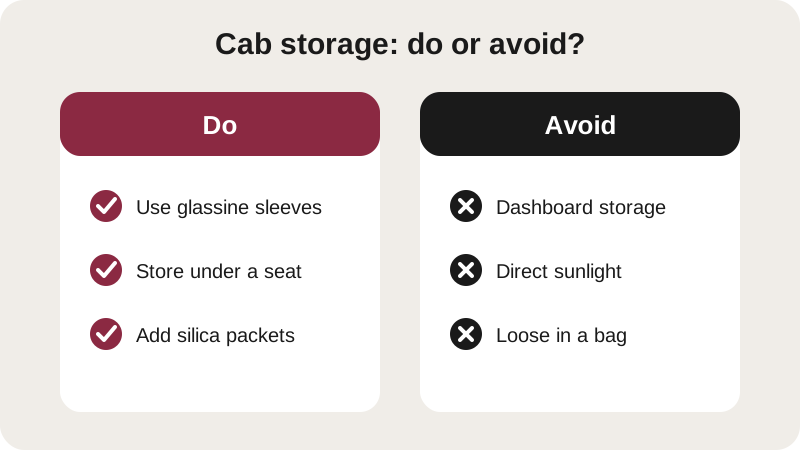
Keep loose stamps in a glassine envelope until you can mount them properly at home or at a truck stop with a flat surface. A stockbook with glassine pockets works well as a rolling home for stamps you have not catalogued yet, and a slim hingeless album protects anything you have already identified and want to keep flat. Never store either one on the dashboard, in the sleeper's rear window shelf, or anywhere that gets direct sun—heat softens stamp hinge and stamp mount adhesive and can loosen gum on mint stamps.
Which cab conditions damage stamps the most?
Not every hazard in a cab is equally dangerous to paper. Heat and direct light do the most damage over time, while the low-frequency vibration of highway driving is comparatively mild as long as stamps are mounted rather than loose in a bag.
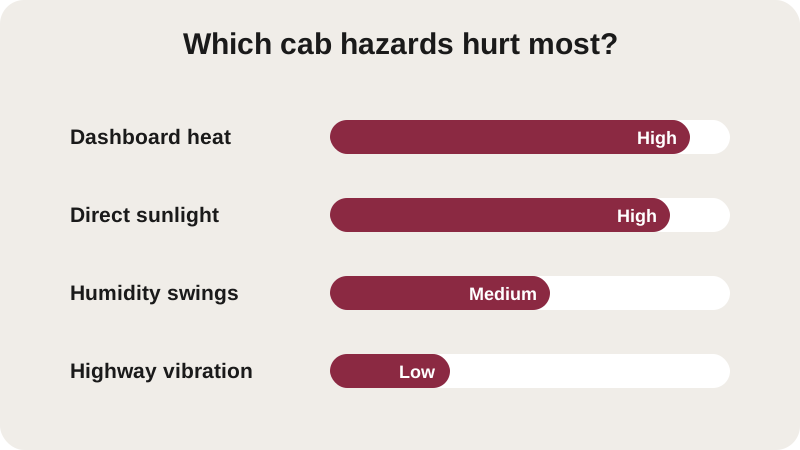
Humidity swings matter too, especially if a route runs through a humid region in summer and dry mountain air in winter in the same week. A sealed plastic bin with a few silica packets keeps moisture stable for a stockbook or hingeless album riding in a cab for weeks at a time.
What tools actually fit in a truck cab?
You do not need a full desk setup to grade and identify stamps properly on the road. A compact kit covers almost everything you need:
- Stamp tongs: for handling anything you have not mounted yet—fingers leave oil that damages gum and paper over time
- A pocket magnifier: for checking centering, perforation detail, and small printing flaws
- A perforation gauge: a card-sized gauge measures how many perforation holes fall within 2 centimetres, enough to tell common issues from scarcer varieties
- A small battery UV lamp: useful for checking watermark details, paper fluorescence, and spotting obvious repairs or reprints
- A stockbook: for sorting stamps by country or topic before you decide where each one belongs
If any of these tools are new to you, start with proper tong technique and learn how to use a magnifier correctly before grading anything found on the road.
How do you identify and catalogue stamps between stops?
Organizing stamps on the road does not need a full desk, only a phone and a flat surface. A photo-based identifier can confirm a stamp's country and year of issue in the time it takes to finish a coffee at a rest stop.
- Sort first: separate stamps by country or obvious design while they are still loose in a glassine envelope
- Photograph or scan: use good light and a flat background to capture clear detail of the design and any watermark
- Identify: confirm country, year, and likely catalogue listing against Scott, Stanley Gibbons, or Michel numbering
- Grade: check centering and perforations, and note whether a mint example is MNH or MH before deciding how to mount it
- Log it: record the catalogue number and condition before moving the stamp into an album
This routine works the same whether you are sorting a handful of duplicates or a box lot bought at a truck stop flea market. The goal is not to finish a whole collection in one sitting—it is to never let a pile of unidentified stamps grow faster than you can process it.
The fundamentals do not change because a desk has been replaced by a cab: identify correctly, grade honestly, and store stamps the way the material demands. If storage is where you are still improvising, the full storage and preservation guide covers humidity, light, and album choice in more detail, and the guide to improving your collecting skills is a good next stop once identification starts feeling routine.
Can you really collect stamps while driving for a living?
Yes. Collecting stamps while truck driving works well because the hobby fits into fuel stops, rest breaks, and loading delays. A stockbook, tongs, and a loupe take up less room than a tablet, and most of the identification and grading work can happen in short sessions rather than one long sitting.
How do I stop heat in a truck from damaging stamps?
Never leave stamps on the dashboard, rear shelf, or anywhere that gets direct sun. Store them in glassine envelopes inside a sealed bin kept under a seat or in the sleeper, away from heat sources. Heat and light soften stamp hinge and mount adhesive and can loosen gum on mint stamps.
What's the smallest tool kit for grading stamps on the road?
Stamp tongs, a pocket magnifier, a card-sized perforation gauge, and a small battery UV lamp cover most grading and identification needs. Add a stockbook for sorting unidentified finds by country or topic. All four tools fit easily in a glove box or a small zip pouch.
Is a stockbook or an album better for a truck cab?
Use both, for different jobs. A stockbook is the right home for stamps you have not fully identified or catalogued yet, since it is quick to add to and reorganize. Move stamps into a hingeless album only once you have confirmed country, year, and catalogue number.
Can a phone really identify stamps found on the road?
A photo-based identifier can confirm a stamp's country of origin and likely year of issue from a clear picture, which narrows down the catalogue listing fast. You still want a loupe to check centering and perforation detail before deciding how to grade and mount the stamp.