Improving your stamp collecting skills comes down to practicing identification, learning to grade condition honestly, using the right tools, and organising your collection so you can compare and learn from it.
To improve stamp collecting skills, focus on three habits: examine stamps closely and often, learn to grade condition consistently, and keep organised records you can compare over time. Skill in this hobby comes from repetition with real stamps, not from reading about them once and moving on.
Many collectors plateau after the beginner stage because they stop testing themselves. They know the basics from a beginner's guide, but they never push further into identification details, condition assessment, or systematic comparison. The sections below outline concrete ways to keep sharpening your eye.
How do you train your eye for stamp identification?
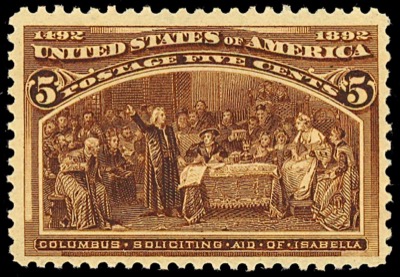
Identification skill is built by looking at the same features on many stamps until patterns become automatic. Start with the basics every time: country of origin, denomination, printing method, and design. Then move to the finer details that separate a common stamp from a scarce variety.
- Watermarks: Hold stamps up to light or use watermark fluid to see the pattern pressed into the paper during manufacture. Practising on ordinary stamps builds the skill you will need for harder cases, and the watermarks guide covers the detection methods in detail.
- Perforations: Use a gauge to count the number of perforation teeth across 2 centimetres of the stamp's edge. Small differences in this measurement often distinguish one printing from another, as explained in the perforations guide.
- Country of origin: Many stamps carry no obvious country name, especially early British issues, so learning to recognise design conventions matters. The guide on identifying a stamp's country of origin is a good starting reference.
Cross-check your findings against a standard catalog such as Scott, Stanley Gibbons, or Michel. Each catalog numbers and describes stamps slightly differently, and learning to move between them is itself a useful skill, particularly if you collect internationally.
How do you get better at grading stamp condition?
Try the free stamp scanner
Photograph any stamp and let StampScan identify it and add it to your digital collection.
Get StampScan FreeGrading improves through comparison. Look at many examples of the same stamp side by side and rank them by centering, gum, and perforation quality before you check any reference material. Then compare your ranking against expert descriptions to see where your eye was off.
Key factors to train yourself on:
- Centering: How evenly the design sits within its margins. This is usually the single biggest factor in visual grading.
- Gum condition: Learn to tell mint never hinged (MNH) from mint hinged (MH) stamps by examining the gum under raking light. A stamp hinge leaves a distinct disturbance in the gum that experienced collectors can spot quickly.
- Perforation condition: Missing teeth, rounded corners, or reperforated edges all lower a stamp's grade.
- Paper faults: Thins, creases, and toning are easiest to see by holding the stamp up to a strong light or under a UV lamp.
The full condition grading guide walks through the standard grading scale in more depth. Practising grading on stamps you already own, before you ever consider buying or selling, is the fastest way to build confidence in your own judgment.
What tools should you learn to use properly?
A small set of tools, used correctly, does more for your skills than any amount of expensive equipment. Learning to use basic tools well is more valuable than owning advanced ones badly.
- Stamp tongs: Handling stamps with tongs instead of fingers prevents the oils and creases that damage paper and gum. This should become automatic before anything else.
- Perforation gauge: Essential for measuring perforation counts accurately and consistently.
- UV lamp: Useful for spotting repairs, thins, and certain paper or ink varieties that are invisible in normal light.
- Stockbook and hingeless album: A stockbook is useful for sorting and temporary storage, while a hingeless album gives permanent, tidy display without the risk that a stamp hinge poses to unused gum.
- Glassine envelopes: Good for holding loose stamps safely while you sort or research them, without scratching the surface.
For a broader rundown of what to buy and in what order, see the stamp albums and supplies guide. Building comfort with these tools early means you can focus your attention on the stamp itself rather than fumbling with equipment.
How does organising your collection make you a better collector?
A disorganised collection is hard to learn from. If you cannot easily compare two examples of the same stamp, you cannot practice grading or spot varieties. Systematic organisation, whether by country, by catalog number, or by theme, turns your collection into a working reference tool rather than a pile of paper.
Some collectors organise by country and period, building depth in areas like Australian, Belgian, or Swiss stamps. Others prefer a subject, such as aviation or trains and railways, following the approach covered in the thematic collecting guide. Either way, consistent record-keeping, noting catalog numbers, condition, and acquisition details, gives you a base to measure your own progress against.
What history and reference knowledge should every collector build?
Understanding the background of major issues sharpens your instincts for spotting anomalies. Study well-documented stamps closely: the Penny Black, issued 1 May 1840 and designed using William Wyon's portrait of the young queen, was printed from plates 1 through 11, and each plate has distinguishing characteristics worth learning. The Penny Black identification guide covers these plate differences in detail and is good practice material even if you do not collect classic Britain.
Reading about famous rarities such as the Inverted Jenny or the British Guiana 1c magenta also teaches you what separates an ordinary printing from an exceptional one, usually a single overlooked detail rather than anything obvious. This kind of close reading trains you to look harder at your own material instead of taking a stamp's identity for granted.
How can technology support your growth as a collector?
An identification app such as the app on this site can quickly narrow down a stamp's country, series, and likely issue from a photograph, freeing you to concentrate your attention on the harder skills: grading condition, confirming watermarks, and measuring perforations by hand. Treat automated identification as a starting point that speeds up research, not a substitute for developing your own eye. The more stamps you examine carefully yourself, matching what you see against catalog descriptions and reference guides such as the stamp identification guide, the faster your skills will improve.
Consistent, hands-on practice with proper tools, honest grading, and organised records will do more for your collecting skill over a year than any single purchase or shortcut. Treat every stamp you handle as a small identification exercise, and the improvement compounds.
Try the free stamp scanner
Photograph any stamp and let StampScan identify it and add it to your digital collection.
Get StampScan FreeWhat is the fastest way to improve stamp collecting skills?
Handle stamps regularly with proper tools, compare them against a catalog, and practice identifying watermarks and perforations on stamps you already own. Repetition with real specimens builds recognition skills faster than reading alone. Keeping notes on each stamp you examine reinforces what you learn.
Do I need to buy expensive equipment to get better at stamp collecting?
No. A perforation gauge, stamp tongs, a UV lamp, and a stockbook cover most identification needs and cost relatively little. The skill comes from consistent use, not from owning premium equipment. Add tools gradually as your collecting focus becomes clearer.
How important is condition grading to becoming a better collector?
Very important. Centering, gum condition, and perforation quality often matter more than age or country. Learning to grade consistently helps you judge stamps accurately, avoid overpaying, and build a collection that holds together in quality, not just quantity.
Should beginners specialize early or collect broadly?
Most collectors improve faster by collecting broadly at first, then narrowing to a country, period, or theme once they notice what interests them. Specializing too early can limit exposure to the variety needed to develop a trained eye.
Can an app really help me improve as a collector?
An identification app speeds up the process of narrowing down country, issue, and design, which frees up time to study the details that matter, such as watermarks, perforations, and centering, by hand and by eye.