Fitness enthusiasts can build a stamp collection around training schedules by using a portable kit, protecting stamps from sweat and humidity, and doing identification and grading work on rest days.
Published
Quick answer
Stamp collecting tips for fitness enthusiasts come down to portability and timing: carry a slim stockbook, tongs, and glassine envelopes, keep stamps away from sweat, and use rest days to catalogue and grade.
Key takeaways
- A slim stockbook and tongs fit easily into a gym bag or race kit
- Rest days are ideal for cataloguing, grading, and research work
- Sweaty or damp hands are the biggest handling risk for collectors who train
- Travel to outdoor races is a good source of new postmarks and local stamps
- A UV lamp and loupe work better at home than on the move
If you are looking for stamp collecting tips for fitness enthusiasts, the short answer is to treat your stamp kit like gym gear: small, durable, and ready to grab between a session and a shower. Stamp collecting fits neatly around training once you build it into recovery time, travel windows, and the quiet minutes before or after a workout.
How can fitness enthusiasts fit stamp collecting into a busy training schedule?
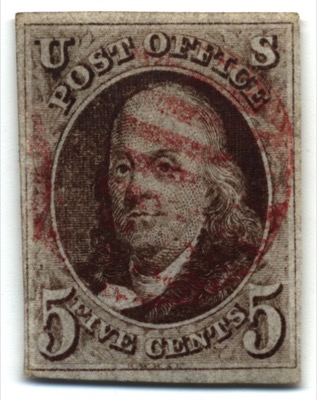
Training already runs on fixed blocks: warm-up, main set, cooldown, shower. Stamp collecting slots into the same rhythm if you treat it as a five-minute task instead of an open-ended project. Sort one small batch while you stretch, or check a few stamps against a catalogue while your legs recover.
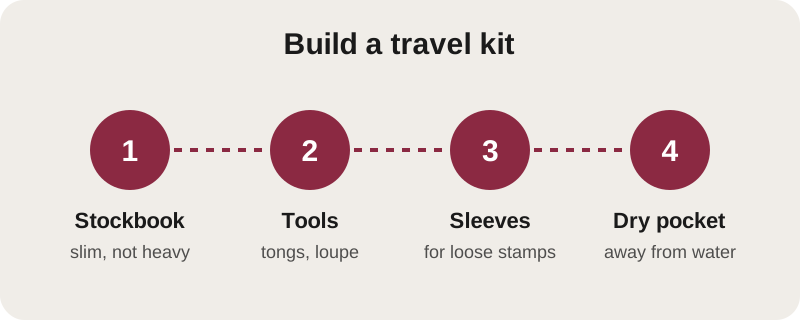
The habit that lasts is pairing a stamp task with something you already do every day, rather than scheduling a separate block of time for the hobby. A few options that work well for people with packed training calendars:
- Pre-shower sort: spend five minutes moving new stamps from an envelope into a stockbook before you shower.
- Travel-day review: use time at a race expo or airport to check catalogue numbers against your want list.
- Rest-day deep dive: save watermark checks and grading for the one day a week you are not training hard.
If you are completely new to the hobby, the beginner's guide to stamp collecting covers the basics of tools and terminology before you build a routine around them. It is worth reading once, slowly, rather than trying to learn everything in short bursts between sets.
Many fitness enthusiasts already track progress obsessively, whether that is pace, sets, or recovery scores. The same instinct transfers well to stamp collecting: a simple log of what you have sorted, what still needs identifying, and what is waiting on a rest day keeps the hobby moving forward even when training takes priority most weeks.
What stamp collecting tools travel well to the gym, track, or race?
Not every tool belongs in a gym bag. A full hingeless album, a bottle of watermark fluid, and a UV lamp are better left at home; they are bulky and easy to damage in transit. What travels well is a short list of lightweight essentials.
- A slim stockbook: holds loose stamps safely without the weight of a full album.
- Stamp tongs: the single most important tool for handling stamps with sweaty or chalk-dusted hands.
- Glassine envelopes: protect stamps picked up on the road until you can sort them properly.
- A pocket loupe: enough for a rough check of centering before closer inspection at home.
Outdoor events are a quiet advantage for collectors. A race weekend in a new town, an outdoor trail event, or a training camp abroad often means a different post office, different local issues, and sometimes a postmark you would not otherwise see. Bring a few empty glassine envelopes specifically for anything you pick up along the way, and resist the urge to handle them until your hands are clean and dry.
It also helps to decide in advance what you are actually hunting for on an outdoor trip. Collectors who focus on a specific country, era, or theme tend to come home with a more useful handful of finds than those who grab anything with a stamp on it. A clear focus also makes the post-trip sorting session, usually on the next rest day, much faster.
How do you keep sweat and humidity from damaging your stamps?
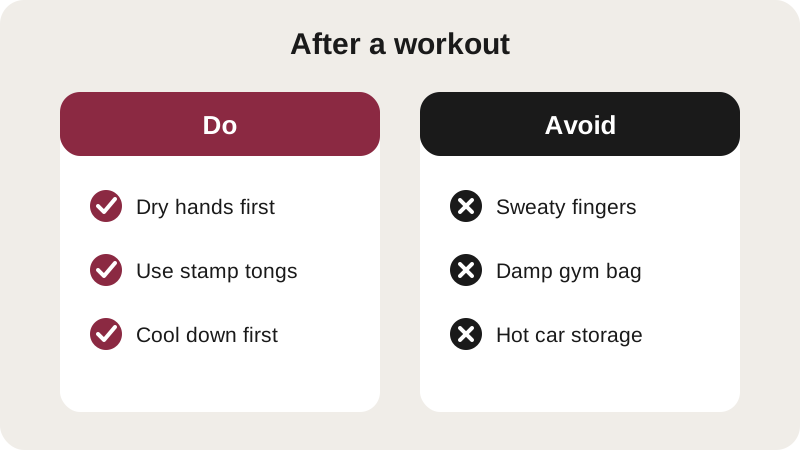
Stamps are paper, and paper reacts badly to moisture. The biggest risk for an active collector is not dust or sunlight but damp hands, a humid gym bag, or a hot car left in the sun after an outdoor session.
For longer-term storage once you are home, the guide to storing and preserving a stamp collection covers humidity control and the difference between a glassine envelope, a stockbook, and a hingeless album in more depth. It is worth reading before you invest in any permanent album, since the wrong storage choice can undo weeks of careful handling.
Even small amounts of moisture in the air matter over time. If you train somewhere humid, or you travel to a hot climate for an outdoor event, consider keeping a small silica packet in your stamp kit alongside the glassine envelopes. It is a cheap habit that protects paper far more than it costs in space.
How should you catalogue and grade stamps on rest days?
Rest days suit the parts of collecting that need steady hands and patience: checking a watermark, measuring centering, or cross-referencing a stamp against Scott, Stanley Gibbons, or Michel catalogue numbers. These tasks are easy to rush on a training day and easy to get right when you are not fatigued.
- Catalogue identification: confirm country, year, and catalogue number before filing a stamp away.
- Condition grading: check centering, perforations, and whether a stamp is MNH or MH before deciding how to mount it.
- Watermark checks: hold the stamp to light or use a UV lamp at a desk, not on the move.
If grading is new to you, the stamp condition grading guide walks through centering and gum condition step by step. Other lifestyle-specific collecting guides on the site, such as the one written for truck drivers, show that the same principle applies across very different schedules: match the task to the time you actually have.
A short rest-day checklist helps keep the backlog manageable. Pull out everything you have sorted since the last rest day, work through it one stamp at a time with tongs and good light, and only move a stamp into its permanent home once you are satisfied with the identification and condition call. Anything you are unsure about can wait in its glassine envelope for another week rather than being filed incorrectly.
Stamp collecting and fitness share more than it first appears. Both reward small, consistent effort over flashy one-off pushes. A five-minute sort on a training day and a longer session on a rest day will build a well-organised collection just as steadily as short daily sessions build fitness.
Can I really collect stamps around a busy training schedule?
Yes. Stamp collecting works well in short sessions, so it fits naturally around warm-ups, cooldowns, and travel downtime. Sorting a handful of stamps or checking a watermark takes only a few minutes, which suits the stop-start rhythm most fitness routines already have.
What is the best way to carry stamps to the gym or a race?
Use a small stockbook rather than a full album, and keep loose stamps in a glassine envelope so they are not loose in a bag. A compact set of stamp tongs is enough for safe handling; leave heavier tools like a UV lamp at home.
How do I stop sweat from damaging my stamps during training?
Never handle stamps with damp or sweaty fingers. Wait until your hands are dry and cool, use stamp tongs instead of fingers, and avoid opening a stockbook inside a hot gym bag where humidity can build up around the paper.
When should I do the detailed cataloguing and grading work?
Save centering checks, watermark detection, and catalogue number lookups for rest days, when you have steady hands and good light. Training days are better suited to quick sorting tasks that do not require close inspection.
Are outdoor races a good source of new stamps?
Outdoor races often take collectors to towns and countries they would not otherwise visit, which is a practical way to pick up local postmarks and regional issues. Just store anything you buy in a glassine envelope until you can catalogue it properly.