A step-by-step guide to identifying US postage stamps by inscription, denomination, design, perforation, and watermark, then confirming the correct Scott catalogue number.
Published
Quick answer
The fastest way to use a US stamp identifier is to check the inscription, denomination, design, and perforation or watermark in that order, then confirm the Scott catalogue number.
Key takeaways
- Check inscription, denomination, design, then perforation or watermark, in that order
- Scott numbers most US catalogue numbers; Stanley Gibbons and Michel cover other countries
- Use stamp tongs and a UV lamp instead of bare fingers while examining a stamp
- MNH means mint never hinged and MH means a hinge mark remains — both affect grading
- Store identified stamps in a stockbook or hingeless album, away from humidity and light
A US stamp identifier works by matching a handful of visible clues — the country inscription, the denomination, the design, and the perforation or watermark — against a reference like the Scott catalogue. Get those four details right and you can usually place a stamp within a specific series and year before you even think about condition.
American stamps span more than a century of definitives, commemoratives, and airmail issues, and many look similar at first glance. This guide walks through what to check, in what order, and which tools make identification reliable rather than a guess.
What does a US stamp identifier actually check first?
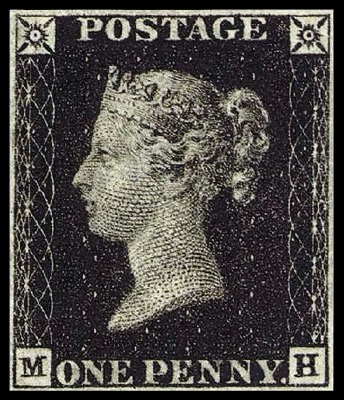
Four details separate one US stamp from another, and checking them in order avoids most mistakes. Start with the inscription, then the denomination, then the design, and only then move on to perforation or watermark.
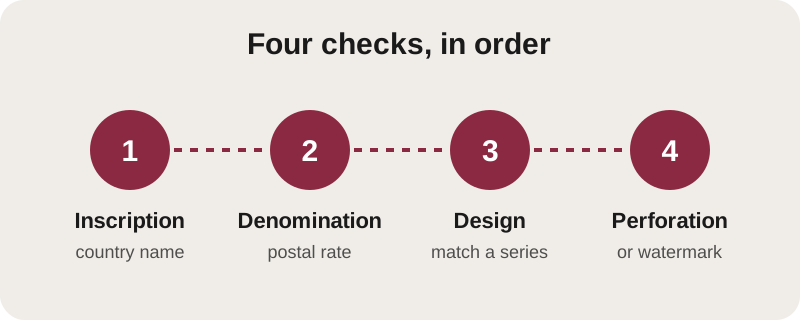
Every US stamp carries "U.S. Postage" or simply "USA" somewhere in the design, which rules out similar-looking stamps from other countries. The denomination tells you roughly when it was issued, since postal rates changed over the decades. The design — a president, a historical scene, a commemorative subject — narrows things to a specific series. Only once the inscription, denomination, and design line up should you reach for a perforation gauge or hold the stamp up to check the watermark, since those separate different printings of the same basic design. For stamps that don't say "USA" at all, start by learning how to identify a stamp's country of origin before assuming it's American.
How do you match a US stamp to its Scott catalogue number?
Scott is the standard reference for US stamps, numbering issues roughly in the order they were released. Once you know the series and approximate date, a handful of Scott numbers usually fit, and you confirm the exact one by color, perforation, and watermark.
Collectors outside the United States use different numbering systems for their own stamps, which is worth knowing if your collection is mixed:
| Catalogue | Primary coverage |
|---|---|
| Scott | United States and worldwide, standard in North America |
| Stanley Gibbons | Britain and the Commonwealth, standard in the UK |
| Michel | Germany and much of continental Europe |
If you're trying to look up an exact Scott number without owning a physical catalogue, see our guide on finding a Scott catalogue online for free. For stamps where several printings share the same design, the watermark and the perforation measurement are usually the deciding factors between two close catalogue numbers.
What tools help you identify a US stamp accurately?
A handful of inexpensive tools make identification far more reliable than eyeballing a stamp, and each one isolates a specific detail that's otherwise easy to misjudge.
- Pick the stamp up with stamp tongs, not bare fingers, to avoid oils and creases that can affect both identification and later grading.
- Read the inscription and denomination carefully, and write down what you see before comparing it to a catalogue.
- Compare the design against known series images to narrow down the approximate issue date.
- Measure the perforations with a gauge, checking both horizontal and vertical edges.
- Hold the stamp over a UV lamp or watermark tray to check for a watermark hidden beneath the printed design.
- Cross-check your findings against a Scott listing to confirm the specific catalogue number.
A stockbook is useful at this stage too — it lets you lay out several candidate stamps side by side while you compare them, rather than shuffling loose stamps around a desk.
Why are some US stamps harder to identify than others?
Not every US stamp is equally easy to pin down. Modern commemoratives usually spell out their subject and year right on the design, while older issues rely entirely on design comparison and watermark checks.
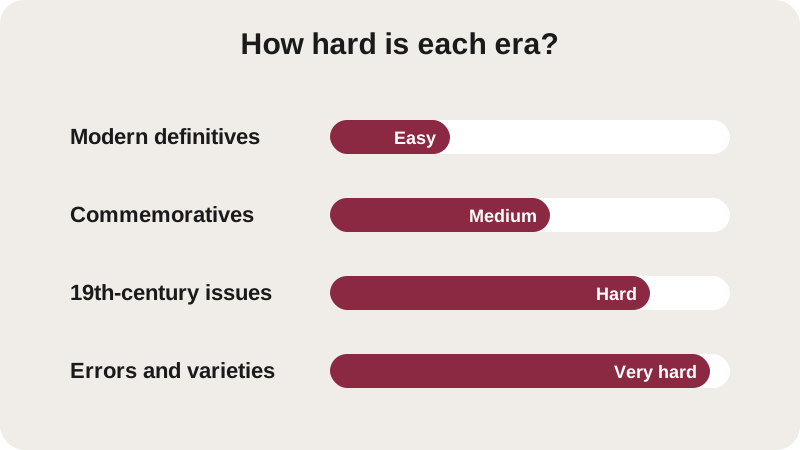
Printing errors and varieties sit at the hard end of that scale because they look almost identical to the normal stamp — the famous Inverted Jenny is a design that otherwise matches its series exactly, except for one flipped element. If a stamp looks slightly "off" compared to a normal copy, that's worth a closer look rather than a quick dismissal. Our guide to postage stamp errors covers the main categories to watch for, and our roundup of notable American stamps shows how specific a correct identification needs to be before anything else matters.
What should you do once you've identified a US stamp?
Identification is the first step. What you do next — grading and storage — protects the work you've put in.
Check whether the stamp is MNH (mint never hinged) or MH (mint hinged, meaning a stamp hinge left a mark on the gum). This distinction doesn't change the catalogue number, but it matters for condition records. Centering also matters: a well-centered stamp with even margins is graded differently from one where the design sits close to one edge. Our condition grading guide walks through how to assess centering and gum condition step by step.
Once a stamp is identified and graded, give it a stable home. A hingeless album or a stockbook both work well, and a glassine envelope is useful for stamps waiting to be sorted. Keep everything away from humidity and direct light — our storage and preservation guide covers the details. For a broader refresher on the identification process itself, see our general stamp identification guide.
Careful identification, done in order, turns a pile of unsorted US stamps into a catalogued collection you can actually work with — which is the point of doing it properly the first time.
What's the fastest way to identify a US stamp?
Check four things in order: the inscription (confirming it says U.S. Postage or USA), the printed denomination, the design or portrait, and finally the perforation measurement or watermark. Those four details usually narrow a stamp to a single series, and often to one specific catalogue number, without needing to guess.
Do I need a Scott catalogue to identify US stamps?
Scott is the standard reference for US stamps and is the most reliable way to confirm an exact catalogue number. A photo-based identifier can narrow down the series and likely candidates quickly, but checking the final number against a Scott listing is still the most accurate way to confirm it.
How can I tell a common US stamp from a rare error?
Most errors involve something missing or inverted compared to the normal printing, such as a color or a design element. They look ordinary at a glance, which is why collectors always compare against a known normal copy. If something looks off, treat it as worth closer inspection rather than assuming it's a mistake.
Does color help identify a US stamp?
Color can help narrow a search but should never be the only clue, since ink shades vary between printings, exposure to light, and paper aging. Inscription, denomination, and perforation are more stable features. Use color as a secondary check once the series is already narrowed down.
Is a photo app enough, or do I still need a catalogue?
A photo-based identifier is a fast way to recognize the country, series, and likely year of a stamp. For an exact catalogue number, especially where watermark or perforation varieties exist within the same design, cross-checking against a Scott listing is still the more precise final step.