There is no official free digital edition of the Scott catalog, but collectors can still identify a stamp's Scott number for free using country, year, and design clues, library access, and photo-based identification tools.
If you are searching for a Scott stamp catalog online free of charge, the honest answer is that no official free digital edition exists, since the catalog is copyrighted and revised every year. There are still several reliable ways to find a stamp's Scott catalog number without paying for the printed volumes, and this guide walks through all of them.
What is the Scott catalog, and why does it matter?
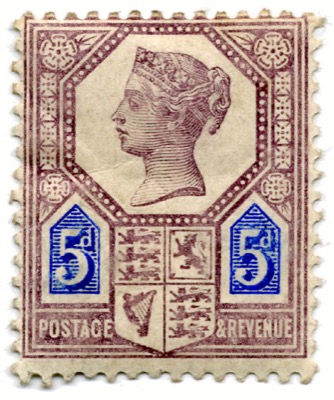
The Scott catalog is a reference system that assigns a unique number to every stamp issue, organized by country and then by year of release. Collectors use that number as shorthand for a specific stamp, the way a library uses a call number for a book. Instead of describing "the blue three-cent stamp from 1932 with the oak leaves," you simply say the Scott number and every collector or dealer knows exactly which stamp you mean.
This matters most when you are cataloguing a collection. A spreadsheet or album page organized by Scott number lets you track duplicates, spot gaps in a set, and cross-reference your stamps against standard checklists. It is also the system most commonly cited in auction listings and dealer stock, so knowing a stamp's number makes it far easier to research and compare examples.
Is there a way to look up Scott numbers online for free?
There is no complete, legally free online edition of the Scott catalog. The publisher maintains copyright over its listings and updates them annually, which is part of why the printed volumes and digital subscriptions carry a cost. Free excerpts and forum posts circulate occasionally, but they are often incomplete, outdated, or simply wrong about minor varieties, so they are not something to rely on for an exact number.
The most dependable free route is a public library with a philatelic reference section, or a local stamp club that keeps a shared set of volumes for members. Many city and university libraries hold current or near-current Scott sets specifically because individual collectors cannot justify buying every annual update. A philatelic society meeting is another good free option, since members often bring reference volumes and are happy to help you look up a number.
How can you identify a stamp's Scott number without owning the catalog?
Finding the right catalog number starts with identifying the stamp itself, not the number. Once you know the country, approximate year, denomination, and design, narrowing down the matching entry becomes much faster, even with only brief access to a reference copy.
- Country of origin: Scott numbers are grouped by country first, so confirming where a stamp was issued immediately narrows your search. See our guide to identifying a stamp's country of origin if the inscriptions are unclear.
- Watermark: Many issues look identical except for a hidden watermark that separates one catalog listing from another. A stamp watermark check with a watermark tray or UV lamp can rule out look-alike varieties.
- Perforation measurement: Perforation gauges measure the number of teeth across 2 centimetres of a stamp's edge, and different perforation measurements often correspond to entirely different catalog numbers for what otherwise looks like the same design. Our stamp perforation guide covers how to measure this correctly.
- Design and printing details: Colour shade, plate characteristics, and printing method can all separate one catalog entry from a similar-looking neighbour.
A photo-based identification tool can speed up this first stage considerably. The app analyses a photo of your stamp and returns likely matches for country, issue, and design, which gives you a shortlist to check against a reference copy of the catalog rather than paging through an entire country's listings by hand. Our stamp identification guide walks through this process in more detail.
How does Scott numbering compare to Stanley Gibbons and Michel?
Scott is the catalog most widely used in the United States, but it is not the only numbering system in circulation. Stanley Gibbons is the standard reference for British and Commonwealth collectors, and Michel plays the same role across much of continental Europe. The same physical stamp can carry three completely different numbers depending on which catalog you consult, which causes real confusion when comparing listings from different countries.
| Catalog | Primary Region | Typical Use |
|---|---|---|
| Scott | United States and worldwide | Standard reference for US collectors and dealers |
| Stanley Gibbons | United Kingdom and Commonwealth | Standard reference for British and Commonwealth issues |
| Michel | Germany and continental Europe | Standard reference across much of Europe |
This is why older, well-documented issues can get complicated fast. The Penny Black, first issued 1 May 1840 and based on a portrait design adapted from a medal by William Wyon, exists in plates numbered 1 through 11, and each catalog system records plate and variety detail slightly differently. If you are cross-referencing an older British issue using a Scott listing, it is worth double-checking the plate and printing details separately rather than assuming the numbering lines up exactly with a Stanley Gibbons entry for the same stamp.
A handful of stamps are so well known that collectors refer to them by name rather than catalog number at all, regardless of which system they use. The British Guiana 1c magenta and the Inverted Jenny are two of the most recognizable examples. You can read the full background on one of these in our piece on the British Guiana 1c magenta.
What do you do with a Scott number once you have it?
Once you have confirmed a stamp's Scott number, write it down somewhere permanent rather than relying on memory. A simple spreadsheet with columns for Scott number, country, year, and condition works well, and it pairs naturally with a physical storage system such as a stockbook or a hingeless album organized in the same order as your catalog listing.
While you are recording the number, note the stamp's condition too. Whether it is mint never hinged (MNH) or mint hinged (MH) affects how you should mount it going forward: a stamp hinge is fine for used or MH stock, but an MNH stamp is generally better protected with a stamp mount so the gum stays undisturbed. Always handle the stamp with stamp tongs rather than your fingers while you do this. For a closer look at how condition and centering affect how a stamp is described, see our stamp condition grading guide.
Keep loose stamps in a glassine envelope until they are mounted, and store your reference notes alongside your physical collection so the catalog numbers stay linked to the actual stamps. Over time, this habit turns a box of loose stamps into an organized, searchable collection, and it is far easier to maintain if you record the catalog number the moment you identify a new stamp rather than trying to reconstruct it later. If you are starting this process from scratch, our beginner's guide to stamp collecting covers the basic tools and habits worth setting up early.
Is there a legal free version of the Scott catalog online?
No. The Scott catalog is copyrighted and updated annually, so no complete legal free digital edition exists online. Public libraries, philatelic societies, and stamp clubs often keep reference copies you can consult in person at no cost, which is the most reliable free route to exact numbers.
How do I find my stamp's Scott number without buying the catalog?
Identify the stamp's country, year, denomination, and design first, since Scott numbers are organized by country and issue date. Once you know those details, a library reference copy or a stamp club member can usually point you to the exact number in minutes.
Does the Scott number match the Stanley Gibbons or Michel number?
No. Each catalog assigns its own numbers to the same stamp, so a single issue can have three different reference numbers depending on the system. Always check which catalog a listing or album page is using before comparing numbers.
Can a stamp identification app give me the Scott number directly?
An identification app can confirm the country, issue, and design of a stamp from a photo, narrowing down which catalog entry applies. You then match that identification to the correct Scott number yourself using a reference copy or catalog listing.
Why do I need the Scott number at all if I just want to organize my collection?
The Scott number is the standard way collectors, albums, and inventory systems refer to a specific stamp and its varieties. Recording it saves time later when cataloguing, insuring, or comparing your collection against standard checklists.