Stamp perforation is the pattern of holes punched between stamps, and measuring it correctly with a gauge is often the deciding factor in identifying which specific stamp variety you actually hold.
Stamp perforation is the row of small holes punched between stamps on a printed sheet, measured by counting how many holes fit into a span of 2 centimetres with a tool called a perforation gauge. Getting that measurement right is often the only way to tell two similar-looking stamps apart.
What exactly is a perforation?
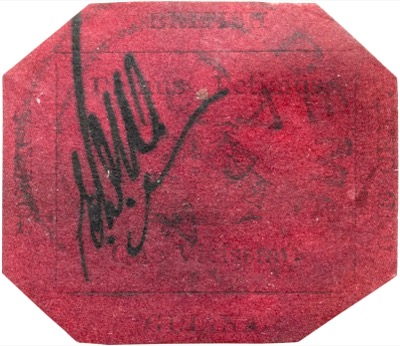
Before perforating machines existed, postal clerks separated stamps from a sheet with scissors or a knife. This was slow and often left ragged edges. Perforation solved the problem by punching a line of small round holes between each stamp, so a clean tear along a straight, evenly spaced line became possible. What looks like a decorative edge is really a manufacturing detail, and it is one of the first things worth checking when you sit down to identify a stamp.
The perforation "teeth" that stick out from a stamp's edge are simply the paper left between the punched holes. Their size, spacing, and shape depend on the machine and pins used to make them, which is why perforation varies so much between issues, countries, and even printings of the same design.
How do you measure stamp perforation?
Try the free stamp scanner
Photograph any stamp and let StampScan identify it and add it to your digital collection.
Get StampScan FreePerforation is measured with a perforation gauge, usually a printed card or metal ruler marked with rows of dots at different spacings. To use one:
- Lay the edge of the stamp along the gauge.
- Slide the stamp up or down until the perforation holes line up exactly with one row of dots.
- Read the number printed next to that row. This is the perforation measurement, expressed as the number of holes per 2 centimetres.
- Check each side of the stamp separately, since horizontal and vertical measurements can differ on the same stamp.
A basic printed gauge is cheap and accurate enough for most collectors. This step matters more than it might seem, because catalogues such as Scott, Stanley Gibbons, and Michel often list otherwise identical stamps as separate varieties purely on the basis of perforation measurement. Two stamps that look the same to the naked eye can be catalogued decades apart in rarity because one measures a fraction differently on the gauge. For a deeper walkthrough of gauge reading and common perforation sizes, see the complete guide to reading stamp perforations.
What are the different types of perforation?
The method used to punch the holes affects how the corners of a stamp look, which gives collectors a visual clue even before reaching for a gauge.
Line perforation
The earliest method punched one straight line of holes at a time, first across the sheet in one direction, then turned and punched again in the other direction. Because the two passes were not always perfectly aligned, line-perforated stamps often show slightly irregular or offset holes at the corners.
Comb perforation
Comb perforation punches three sides of a stamp at once in a single stroke, producing much cleaner and more consistent corners. This became the standard method through most of the 20th century.
Harrow and rotary perforation
Harrow perforation punches an entire sheet, or a large section of it, in one operation, giving the most uniform results. Rotary perforation uses a rolling wheel of pins and is common on coil stamps, sometimes leaving slightly oval rather than perfectly round holes.
Why does perforation matter for identifying a stamp?
Perforation is one of the core details that separates look-alike stamps, alongside colour, watermark, and paper type. A stamp printed in more than one perforation size during its run is treated by catalogues as distinct varieties, and one variety can be far more common than another. Measuring perforation correctly, alongside checking the watermark, is often the deciding factor in correct identification.
This is also why using tongs rather than fingers matters when handling stamps for measurement. Stamp tongs let you position a stamp against a gauge without bending or moistening the perforation teeth, which can distort a reading or damage a delicate stamp. Keep stamps in a glassine envelope or stockbook between sessions so the teeth are not crushed while you work through a collection.
How does perforation affect condition and grading?
Perforation plays two roles in grading. First, centering, how evenly the printed design sits within its perforated margins, is one of the most important visual factors graders look at. A stamp with the design pushed hard against one edge grades lower than the same stamp centred evenly, even if the ink and paper are otherwise identical. Second, the physical condition of the perforation teeth themselves matters: missing, torn, or short teeth reduce a stamp's grade regardless of how well the design is centred. For a full breakdown of how graders weigh centering against other factors, see the stamp condition grading guide.
Reperforation, where new holes are added or teeth are trimmed to disguise damage, is a known form of alteration. Uneven hole spacing, slightly smaller stamp dimensions, or a UV lamp revealing paper repairs are all signs worth checking before trusting a stamp's apparent perforation. This overlaps with the broader subject of spotting altered stamps generally, covered in the guide on how to spot fake stamps.
What about imperforate and part-perforate stamps?
Some stamps were issued without any perforation at all, either as an early format before perforating machines were adopted or as a printing error where a sheet bypassed the perforator. Imperforate pairs, where two stamps remain joined, are considered more reliable evidence of a genuine imperforate issue than a single stamp with trimmed edges. Similarly, part-perforate stamps show holes on some sides but not others, usually the result of a sheet only partly feeding through the machine. Both categories fall under the wider subject of printing mistakes, which is explored in the guide to postage stamp errors.
How should I record perforation when cataloguing my collection?
When logging a stamp, note the perforation measurement alongside its watermark, colour shade, and whether it is mint never hinged (MNH) or mint hinged (MH). This level of detail is what separates a casual list from a proper catalogue entry, and it is exactly the kind of distinction that determines which listing in Scott, Stanley Gibbons, or Michel actually matches your stamp. Store the stamp itself in a stamp mount within a hingeless album, or loose in a stockbook if it has not yet been placed, so the perforation edges stay protected while you work.
Perforation might look like a small manufacturing detail, but it carries real identification weight. Learning to read a gauge properly, and recording what you find, is a habit that pays off every time you sit down with an unfamiliar stamp.
Try the free stamp scanner
Photograph any stamp and let StampScan identify it and add it to your digital collection.
Get StampScan FreeWhat is stamp perforation?
Stamp perforation is the line of small holes punched between stamps on a sheet so they can be torn apart cleanly by hand instead of cut with scissors. The size, spacing, and pattern of these holes vary by printing and are measured using a perforation gauge, which is a key identification tool.
How do you measure stamp perforation?
Lay the stamp's edge against a perforation gauge, a card or ruler printed with rows of dots spaced for different perforation counts. Slide the stamp until one row of dots lines up exactly with the holes or teeth on the stamp's edge. The number beside that row is the perforation measurement.
Why does perforation size matter for identification?
Many stamps share the same design and colour but were printed in more than one perforation size across different print runs. Catalogues such as Scott, Stanley Gibbons, and Michel list these as separate varieties, so an accurate perforation measurement is often the only way to tell them apart.
Can I identify perforation type without a gauge?
You can spot rough clues by eye, such as ragged corners suggesting line perforation versus clean corners suggesting comb perforation, but exact identification needs a gauge. A basic printed card gauge is inexpensive and accurate enough for most collecting purposes.
Does perforation affect a stamp's condition grade?
Yes. Centering of the design within its perforations is one of the main factors in grading, alongside missing or damaged perforation teeth. A stamp with heavily uneven margins or torn perforation teeth grades lower even if the printing itself is flawless.