This article explains what a stamp watermark is, why it separates otherwise identical-looking stamps into different catalogue listings, and the practical methods collectors use to see and identify one.
A stamp watermark is a faint design pressed into the paper itself during manufacture, invisible in normal light but visible when the stamp is backlit, wetted with watermark fluid, or checked under a UV lamp. Watermarks matter because two stamps can look identical in every printed detail and still be completely different catalogue varieties, depending only on the paper they were printed on.
What exactly is a watermark?
A watermark is created while the paper is still wet pulp on the papermaking machine. A patterned roller, called a dandy roll, presses a design into the fibers, thinning the paper slightly wherever the pattern touches. That thinning is what you see later as a lighter or darker area when light passes through the finished sheet. The design becomes part of the paper's structure, not something printed on top of it, which is why ink and printing quality have no effect on whether a watermark is present.
Postal authorities used watermarks for security and identification purposes, often changing the pattern, orientation, or absence of a watermark over the life of an issue. A crown, a multiple-letter pattern, or a national emblem repeated across the sheet are all common designs. Because the watermark comes from the paper supplier and manufacturing period rather than the printing plate, it can change even when the stamp's design does not.
Why does the watermark change how a stamp is identified?
Try the free stamp scanner
Photograph any stamp and let StampScan identify it and add it to your digital collection.
Get StampScan FreeCatalogues such as Scott, Stanley Gibbons, and Michel frequently list the same design twice, or several times, purely because the watermark differs. A stamp printed on watermarked paper and the same design printed later on unwatermarked paper are treated as separate items, sometimes with very different levels of scarcity. Getting the watermark wrong means you have the wrong catalogue number, even if every other feature of the stamp matches.
This is especially important for classic issues where paper supply changed mid-run. It is also central to identifying stamps from certain countries where the watermark is the single deciding factor between common and scarce varieties. Guides on identifying Brazilian stamps by watermark, Chinese stamps by watermark, Dutch stamps by watermark, and Swedish stamps by watermark exist because these national issues cannot be correctly catalogued without checking the paper.
Watermark checking sits alongside other identification steps like measuring perforations and confirming country of origin. All three, design, perforation gauge, and watermark, are usually needed together to reach a firm catalogue number.
How do you actually see a watermark?
Several methods work, ranging from free to inexpensive. Start with the simplest and only move to the next if it doesn't reveal anything.
Dry methods
- Backlighting: Hold the stamp up to a strong light source, or place it face-down on a light box. Some watermarks show clearly this way with no equipment at all.
- Dark background: Lay the stamp face-down on a black surface in good light. The thinned paper of the watermark sometimes appears as a darker patch against the black beneath it.
Watermark fluid
This is the standard method for stamps that resist the dry approaches. Place the stamp face-down in a black glass or ceramic watermark tray, add a few drops of watermark fluid, and the pattern usually appears within seconds as a darker or lighter shape against the black tray. The fluid evaporates fully and leaves no residue on properly formulated products. Always test first on a common stamp, and avoid using it on items with inks known to run or fade, since a small number of early or fugitive-ink issues can react badly to liquid.
UV lamp
A UV lamp is primarily used to check for paper treatments, tagging, and repairs, but it can also help reveal some watermarks, particularly on modern papers with optical brighteners. It is a useful complementary tool rather than a full replacement for fluid or backlighting, and the same lamp is also invaluable for spotting thinned paper, tears, and other faults relevant to grading.
What tools and setup make watermark checking easier?
A basic setup costs very little and covers the vast majority of watermark identification needs:
- Watermark tray: A small black glass or ceramic dish sized for a single stamp.
- Watermark fluid: A purpose-made, quick-evaporating liquid, never household solvents.
- Stamp tongs: Essential for handling stamps during and after wetting, since bare fingers can transfer oils and moisture that damage paper.
- UV lamp: Optional but useful for a fuller picture of paper and condition.
- Glassine envelope: Keep the stamp in one before and after testing to protect it from dust and handling marks.
Work over a clean, dry surface, handle the stamp only with tongs once it's out of its mount or hinge, and let it dry completely on a flat, non-absorbent surface before returning it to a stockbook or hingeless album. Never test a stamp that is already mounted with a hinge or affixed to an album page, since moisture can loosen adhesive or damage nearby stamps.
How does watermark checking fit into overall identification?
Watermark, perforation, and design together are usually what separate a common stamp from a scarce catalogue variety, and they matter more to correct identification than age alone. A stamp identification app can photograph the design and narrow down the country, issue, and likely date, since that part is visual. But the watermark lives in the paper, not on the surface, so it still has to be checked physically with fluid, light, or a UV lamp. Think of the app as the fast first step that tells you which specific catalogue varieties are possible, and the watermark tray as the step that confirms which one you're actually holding.
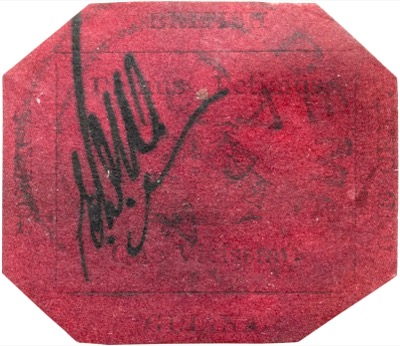
This matters just as much when handling world classics. Stories like the British Guiana 1c magenta or debates around the Zeppelin stamps often turn on paper and printing details that only close physical examination can settle. For everyday collecting, the same careful habits apply: check the watermark before you record a stamp in your storage system or album, and note whether it's watermarked, unwatermarked, or has a specific listed variant, so your catalogue records stay accurate from the start.
What should you record once you've identified the watermark?
Once confirmed, note the watermark type alongside the stamp's perforation measurement, condition grade, and whether it is MNH or MH. This full identification record is what lets you look up the correct catalogue number and understand how that specific variety compares to others of the same design. A stamp that looks unremarkable can turn out to be a scarce watermark variety, and one that looks promising can turn out to be the common version, so the physical check is worth doing properly rather than guessing from appearance alone.
Try the free stamp scanner
Photograph any stamp and let StampScan identify it and add it to your digital collection.
Get StampScan FreeWhat is a stamp watermark?
A stamp watermark is a faint design or pattern pressed into the paper during manufacture, usually by a dandy roll on the papermaking machine. It sits within the paper fibers rather than on the surface, so it is often invisible until you use a method to reveal it, such as watermark fluid or backlighting.
How do I see a watermark without fluid?
Try holding the stamp face-down against a dark background under strong light, or place it face-down on a black tray. Some watermarks show up this way without any liquid. If nothing appears, a purpose-made watermark tray with dark fluid or a UV lamp will usually reveal it safely.
Is watermark fluid safe for stamps?
Quality watermark fluid is formulated to evaporate quickly without damaging gum, ink, or paper, and it is standard practice among collectors. Always test on a common, low-value stamp first, work on a clean glass or ceramic tray, and avoid it on stamps with fugitive or unstable inks.
Why do catalogues list different watermarks for the same design?
Postal authorities sometimes changed the paper supplier or watermark pattern partway through a stamp's printing run without changing the design. Scott, Stanley Gibbons, and Michel catalogues list these as separate varieties because the watermark can significantly affect scarcity, even though the stamp looks identical at a glance.
Can a scanning app detect a watermark for me?
A photo alone usually cannot show a watermark, since it is embedded in the paper rather than printed on it. The app can identify the stamp's design and country from a photo, narrowing down which watermark varieties are possible for that issue, but physically checking the paper is still the reliable way to confirm which one you have.