French stamps are identified by their inscription, currency, and design era rather than by language alone, and most carry no watermark at all.
Quick answer
Knowing how to identify French stamps starts with reading the inscription—RF, POSTES, or FRANCE—then matching the currency and design to a known era, from Cérès and Napoleon profiles to Semeuse and Marianne. Most French stamps are unwatermarked, which is itself a clue.
Key takeaways
- French stamps are identified by inscription (RF, POSTES, FRANCE) and design era, not just language.
- Most French stamps are unwatermarked, unlike many British or German issues—confirm with a UV lamp.
- Catalogue numbers from Scott, Stanley Gibbons, or Michel pin down the exact issue and variety.
- Don't confuse French colonial overprints or Monaco and Belgium issues with mainland France stamps.
- Store identified stamps in glassine envelopes or a hingeless album, sorted in a stockbook by era.
To identify French stamps, start with the small printed inscription rather than the picture: most say RF, POSTES, or FRANCE, and the currency is centimes or francs rather than pence or marks. This article walks through exactly how to identify French stamps, from the earliest Cérès issues to modern Marianne definitives, so you can catalogue them with confidence.
What makes a stamp French in the first place?
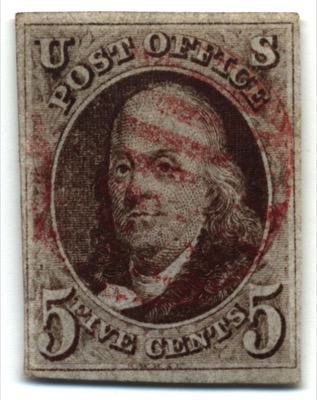
French stamps rarely spell out "France" in large letters the way some countries do. Instead, look for RF (République Française), POSTES for ordinary mail, POSTE AERIENNE for airmail, or TAXE for postage due stamps. Classic 19th-century issues sometimes read EMPIR FRANC during the Second Empire instead of RF.
The currency is your second clue. French stamps are denominated in centimes and francs, never in pence, pfennig, or cents of another system. If you already know how to narrow a stamp to its country of origin by inscription and currency, French stamps will fall into place quickly because the combination of RF and centimes or francs is distinctive.
How do I identify a French stamp step by step?
Working through a French stamp in a fixed order avoids guesswork and keeps you from jumping to conclusions based on the picture alone.
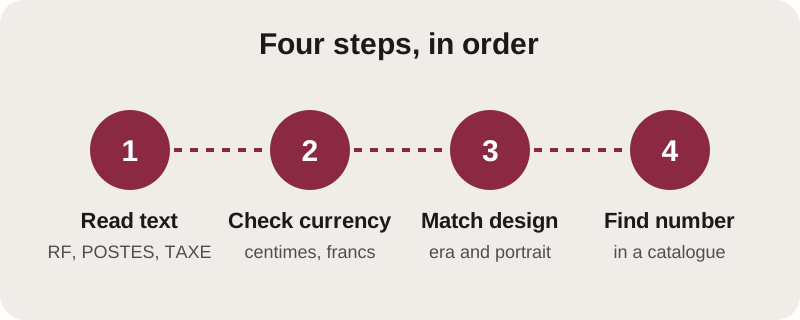
- Read every inscription on the stamp, however small, and note any overprint.
- Check the currency unit printed on the stamp and compare it to known French eras.
- Compare the portrait, allegorical figure, or symbol to recognised French designs.
- Look for a watermark under a UV lamp, and measure the perforation over a 2-centimetre span.
- Match what you've found to an entry in Scott, Stanley Gibbons, or Michel.
How can I tell different eras of French stamps apart?
French definitive stamps went through a handful of very recognisable design families across more than a century, and learning to spot them by eye speeds up identification enormously.
| Era | Design name | What to look for |
|---|---|---|
| Mid-1800s | Cérès | Classical goddess profile, imperforate on early printings |
| Napoleon III period | Napoleon profile | Laureate or bare head, EMPIR FRANC inscription |
| Late 1800s | Type Sage | Allegorical figures representing Peace and Commerce |
| Early 1900s | Semeuse | Sower figure striding across the design, used for decades |
| Mid-1900s onward | Marianne types | Stylised female profile, redrawn repeatedly over the decades |
If a stamp shows a different language entirely but a similar allegorical style, check whether it's actually from a neighbouring French-speaking country. The guide to collecting Belgian stamps is a useful comparison if you're unsure whether something is French or Belgian in origin.
Do French stamps have watermarks, and what else should I check?
Unlike many European countries that printed on heavily watermarked paper, most French stamps from the 19th and 20th centuries were printed on plain, unwatermarked stock. Finding no watermark is therefore a small positive clue rather than a dead end, and it's one of the details our full watermarks guide covers in more depth for other countries by comparison.
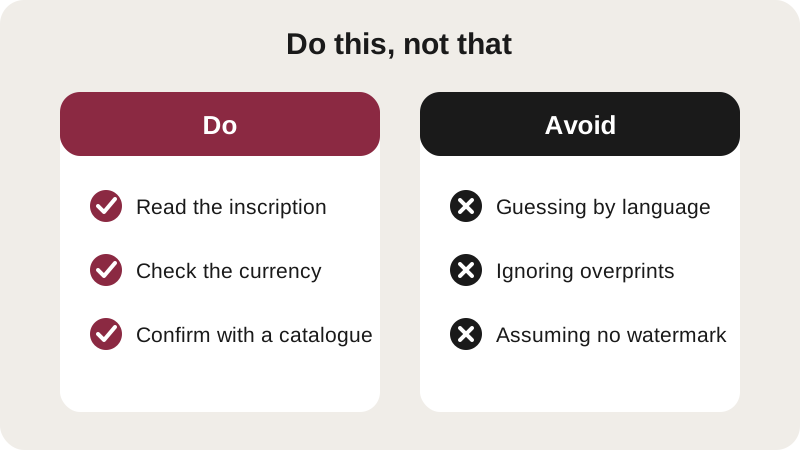
Watch for territory names alongside RF, which usually signal a colonial issue rather than one from mainland France, and for overprints that change a stamp's face value or purpose entirely. A stamp that looks like a standard Semeuse but carries an unexpected overprinted word is worth examining more closely rather than filing away unread.
How do I catalogue and store a French stamp once identified?
Once you've pinned down the inscription, era, and design, record a reference number from Scott, Stanley Gibbons, or Michel so the identification is permanent and searchable rather than something you have to redo later. Note whether the stamp is MNH (mint, never hinged) or MH (mint, hinged), since that affects how you should mount it.
Sort newly identified stamps into a stockbook by era while you work, then move finished pages into a hingeless album for long-term display. Loose or duplicate stamps are safest kept in individual glassine envelopes until you decide where they belong. If you use a stamp hinge or stamp mount, always handle the stamp itself with stamp tongs rather than your fingers to avoid marking the paper or disturbing original gum.
For a broader refresher on sorting any stamp by these same markers before you specialise in France, the general stamp identification guide covers the same inscription-currency-design approach used here. And once your French stamps are correctly identified and catalogued, the separate guide to French stamps worth money picks up from there if you want to understand which identified issues collectors seek out most.
Careful identification is what makes the rest of your collection usable. A correctly identified French stamp, properly catalogued and stored in a glassine envelope or hingeless album, stays easy to find and easy to grade for years to come—long after the details of exactly which Marianne type or Semeuse printing it belongs to have faded from memory.
What inscription tells me a stamp is from France?
Look for RF (République Française), POSTES, POSTE AERIENNE for airmail, or TAXE for postage due. Older issues from the Second Empire may read EMPIR FRANC instead. The currency will be centimes or francs. These small printed words are far more reliable than the stamp's design alone.
Do French stamps have watermarks?
Most French stamps printed from the mid-1800s onward have no watermark at all, which is itself a useful clue when comparing against watermark-heavy countries like Britain or Germany. A small number of early and specialist issues do carry one, so it's still worth checking under a UV lamp before ruling it out.
How can I tell a French colonial stamp from one of mainland France?
Colonial stamps usually carry both RF and the name of the territory, either printed into the design or added as an overprint. Mainland France issues show only RF, POSTES, or FRANCE with no territory name. If you see an unfamiliar place name alongside RF, you're likely holding a colonial issue, not a metropolitan one.
What's the easiest way to date an old French stamp?
Match the portrait or symbol to a known design period: Cérès for the earliest classic issues, Type Sage in the late 1800s, Semeuse through the early 1900s, and Marianne types from the mid-20th century onward. Combine that with the perforation and paper to narrow the date range further.
Which catalogue should I use to look up a French stamp number?
Scott and Stanley Gibbons both cover French issues with internationally recognised numbers, and Michel is widely used across continental Europe. Any of the three will let you record a consistent reference number once you've identified the design and era, which makes cataloguing and insurance records far easier.