A guide to approaching stamp collecting as a slow, breath-aware practice that suits the attention and patience yoga practitioners already train.
Published
Quick answer
Stamp collecting for yoga practitioners works best as a slow, breath-aware hobby: handle stamps with tongs, check centering and watermarks calmly, and store finished pages in a stockbook or hingeless album.
Key takeaways
- Slow, breath-aware handling reduces the shaky-finger damage that rushed sorting causes.
- Stamp tongs and a glassine envelope protect stamps the way careful grip protects joints.
- Grading centering and checking watermarks turns a glance into a focused practice.
- A stockbook or hingeless album keeps a growing collection calm and organised.
- Short, regular sessions suit a practitioner's rhythm better than one long sorting marathon.
Stamp collecting for yoga practitioners works best when it borrows the same slow breath and steady hands you bring to the mat. Handle one stamp at a time, grade it without rushing, and let the session end before your focus does.
Why does stamp collecting suit a yoga practitioner's mindset?
Yoga trains you to notice small sensations without rushing past them: the catch in a breath, the shift of weight on one foot. Stamp collecting asks for the same quality of attention, just aimed at paper instead of the body.
A perforation edge, a shade of ink, a faint watermark — these details only show up when you slow down enough to look. Collectors who come to the hobby from a sitting or asana practice often find they already have the patience that stamp identification rewards. The hobby also gives restless hands something quiet to do: no screens, no urgency, just one small object examined at a time. Many practitioners describe the feeling as similar to holding a pose a few seconds longer than feels comfortable, then realising the extra time was where the real learning happened. If you are new to the wider hobby, a beginner's guide to stamp collecting covers the basics you will build this calmer approach on top of.
How do you start stamp collecting for yoga practitioners?
Start small and let the structure of a short practice guide the structure of a short session. You do not need a large collection or expensive stamps to begin noticing more.
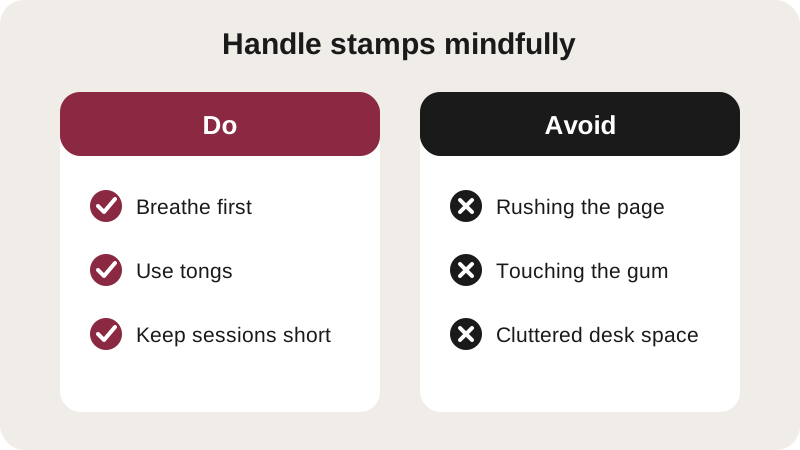
A few simple tips make the transition easier for anyone used to a yoga practice: treat the desk as the mat, treat the tongs as a prop, and treat each stamp as one pose held just long enough to notice it clearly.
- Pick a quiet time when you are not rushing between other tasks, the same way you would arrive early for a class.
- Gather a few basic tools before you sit down: stamp tongs, a glassine envelope, and a stockbook.
- Choose one small theme or country to start with, rather than sorting an entire inherited box at once.
- Pick up one stamp, breathe, and look at it for a full ten seconds before setting it aside.
- Note what you noticed — centering, colour, a watermark — before moving to the next stamp.
- Stop while you still feel steady, not when your eyes are tired and your hands start to rush.
Which tools keep handling calm and safe?
The right tools remove the small anxieties that make handling feel rushed, such as worrying you will leave a fingerprint or bend a corner. A pair of stamp tongs lets you lift and turn a stamp without touching the surface, which protects both the paper and your focus.
A glassine envelope gives each stamp a soft resting place between the tongs and the album, so you are never juggling loose paper while you breathe through a decision. A UV lamp is useful once you move into checking for hidden repairs or re-gumming, but it is not something you need on day one. Keep the tool set small at first; too many accessories spread across the desk work against the calm you are trying to build. For proper handling technique, a guide to using stamp tongs safely walks through grip and angle in more detail, and how to use a stamp magnifier the right way covers the next tool most collectors add.
How should you grade and organise stamps between sessions?
Grading rewards the same sequential attention as a yoga sequence: one factor at a time, in a fixed order, rather than one overall impression. Start with centering, then look for thinning or creases, then confirm whether the stamp is MNH or MH.
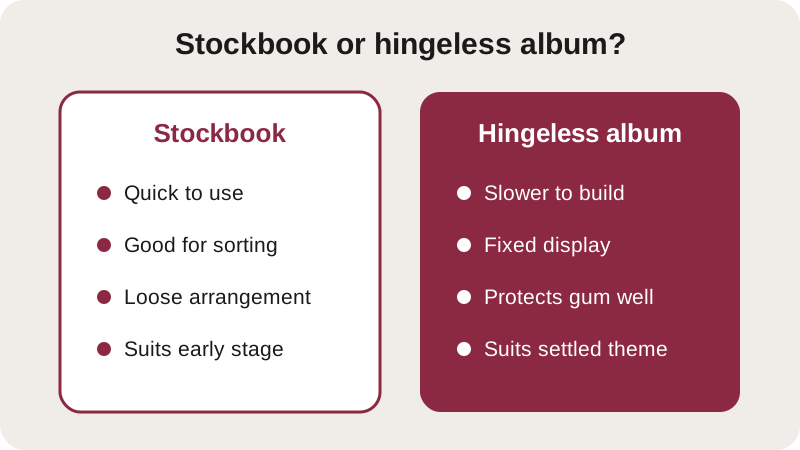
Once a stamp is graded, its storage decision is simple. A stockbook is the right home for early, exploratory sorting because stamps can be lifted out and rearranged without fuss. A hingeless album suits stamps you have already settled on keeping, once a theme or country has become clear. For a fuller comparison of storage materials, this guide to storing and preserving a stamp collection covers the full range of options, and a closer look at grading condition like a professional will sharpen the sequence above.
What themes fit a yoga practitioner's collection?
Thematic collecting lets you follow a subject across countries and decades rather than working strictly by nation, which suits a practitioner's interest in connection and pattern. Stamps depicting meditation figures, botanical subjects, mountains, or wellness anniversaries all form coherent, quiet collections.
A thematic approach also makes each session feel finite: you are not trying to complete an entire country's output, just adding one more piece to a single, slow-growing idea. Some collectors keep a small notebook beside the stockbook, jotting down which theme a new stamp fits before filing it away, so the next session can begin with a clear starting point rather than a blank search. A guide to building a topical stamp collection explains how to choose and narrow a theme so it stays manageable rather than overwhelming.
None of this requires speed or expense. A handful of well-chosen stamps, handled with tongs, graded one factor at a time, and stored in a stockbook or hingeless album, is enough to turn a few quiet minutes a day into a steady, satisfying practice. Treat the tips above as a loose sequence rather than a strict rule, and let your own pace settle in over a few sessions — on the mat or off it.
Do I need special tools to start stamp collecting as a yoga practitioner?
You only need a pair of stamp tongs, a glassine envelope or two, and a stockbook. These keep oils and moisture off the paper while you build the slower, more deliberate handling habits that carry over from a yoga practice.
How long should a mindful stamp-collecting session last?
Short sessions work better than long ones. Fifteen to twenty minutes is enough to examine a handful of stamps closely, check centering, and log them, without the fatigue that leads to rushed handling or mistaken grading.
Can stamp collecting replace meditation?
It is not a substitute for meditation, but it can function as a moving-attention practice: single-pointed focus on one small object, steady breath, and no multitasking. Many practitioners use it to extend the same mindset off the mat.
What is the easiest way to grade a stamp calmly?
Work through one factor at a time rather than judging the whole stamp at once. Check centering first, then look for thinning, then confirm whether it is MNH or MH. This sequence mirrors the step-by-step attention used in asana practice.
Which album type is best for a slow, mindful approach?
A stockbook suits the early, exploratory stage because stamps slide in and out without commitment. A hingeless album suits the later stage, once you have settled on a theme or country and want a calmer, fixed display.