Short, repeatable nap-time sessions and spill-safe supplies like a stockbook and glassine envelopes let new moms keep collecting and correctly identifying stamps without a free afternoon.
Published
Quick answer
Stamp collecting tips for new moms centre on short nap-time sessions, spill-safe supplies like a stockbook and glassine envelopes, and a hingeless album that needs no steady hand. Keep stamp tongs and a UV lamp in one portable kit for quick identification between feeds.
Key takeaways
- Short nap-time sessions beat long collecting blocks with a new baby.
- A hingeless album and stockbook protect stamps without a steady hand.
- Keep stamp tongs, a UV lamp, and glassine envelopes in one portable kit.
- Catalogue with Scott, Stanley Gibbons, or Michel numbers in short batches.
- Keep wipes, lotion, and bottles away from stamps to protect gum and watermark details.
Stamp collecting tips for new moms usually come down to timing: short five- to ten-minute sessions during naps work better than planning long collecting afternoons. The right supplies also matter more than usual, since everything needs to survive one-handed handling and the occasional spilled bottle nearby.
A newborn does not leave much room for a hobby that needs a quiet desk and an uninterrupted hour. Stamp collecting actually adapts well to broken-up time, because sorting, identifying, and filing a handful of stamps can each be done in just a few minutes. The trick is building a routine and a kit around the schedule you already have, rather than trying to carve out hours you don't have. The rest of this guide covers how to structure those short sessions, which supplies hold up best around a baby, and how to keep identifying stamps correctly even when your attention is split.
How can new moms fit stamp collecting into nap times?
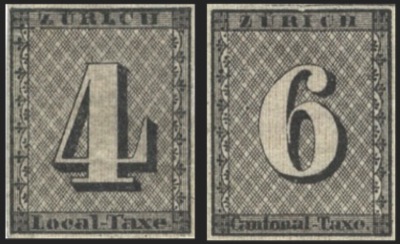
Instead of planning one long session, break the hobby into small, repeatable tasks: sorting a handful of stamps by country, checking a few against a catalogue, or mounting stamps you already identified the day before. Each task takes only a few minutes and can be stopped and picked back up later without losing your place.
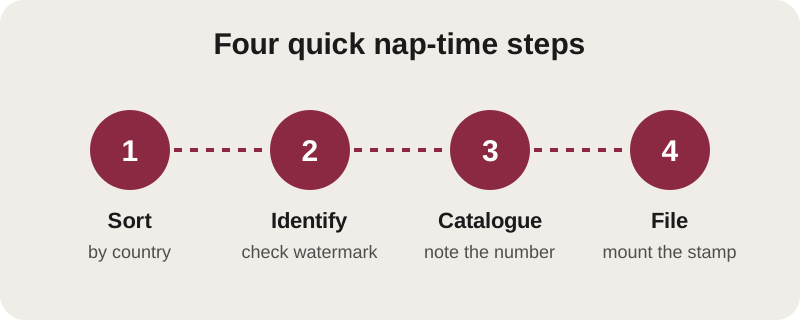
Keep a small notebook or your phone nearby to jot down which stamp, album page, or country you left off on. Losing your place is the main reason short sessions feel unproductive, and a one-line note fixes that. If you are new to the hobby entirely, start with the basics in this beginner's guide before building a nap-time routine around it.
Batch similar tasks together
Sorting takes less concentration than identification, so save sorting for the groggiest early-morning naps and save careful identification work, like checking a watermark or measuring centering, for the sessions when you are more alert. Grouping similar tasks means you are not constantly switching between a mindset that needs focus and one that does not.
What supplies keep a stamp collection safe with a baby in the house?
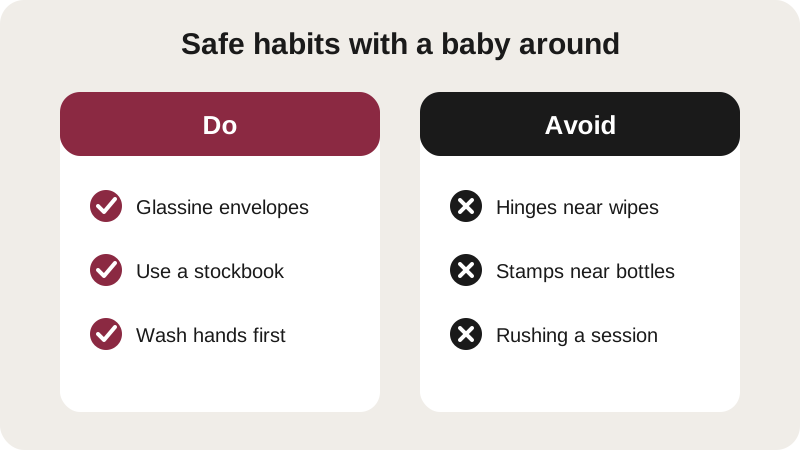
A hingeless album and a stockbook do most of the protective work for you, since stamps slide into pre-made pockets rather than relying on a stamp hinge that needs a steady hand and a flat surface to apply. Glassine envelopes are useful for anything waiting to be filed, keeping loose stamps away from sticky fingers and spilled liquids until you have a moment to mount them properly.
Stamp tongs are worth keeping in the kit too, since they let you pick up and reposition a stamp quickly without touching the surface, which matters when you might be interrupted mid-task. A small UV lamp stored in the same box lets you check for repairs or alterations in the same short session, without setting up separate equipment each time. Storage and handling habits like these are covered in more depth in the complete storage and preservation guide.
How do you identify and catalogue stamps in short bursts?
Identification breaks down naturally into small steps: confirm the country and period, check the watermark, compare perforation and centering, then look up the matching Scott, Stanley Gibbons, or Michel number. None of these steps take long on their own, which makes them well suited to a single nap window rather than a long afternoon at a desk.
Once a stamp is identified, note its catalogue number directly in your album or stockbook so you are not re-checking the same stamp twice on a later, groggier day. If you want a refresher on how condition affects where a stamp belongs in your collection, the condition grading guide covers centering, gum, and the difference between MNH and MH in more detail. For a wider overview of matching a stamp to its origin and era, see the free identification guide.
Is stamp collecting realistic during maternity leave?
Maternity leave is actually a reasonable time to start or restart a collection, precisely because it is unpredictable. A hobby that fits into five-minute windows between feeds, rather than one that demands a fixed block of time, tends to survive the first few months of a new routine better than hobbies that need a schedule. If you started collecting before the baby arrived, this guide for expecting parents covers how to set up a collection that is ready to pick back up once the baby is here.
Stamp collecting also travels well. A stockbook, a pack of glassine envelopes, and a set of tongs fit easily into a diaper bag, which means a feeding chair or a waiting room becomes a usable collecting space. For the quiet, low-stimulation side of the hobby, collectors managing broken sleep in other ways may also find these tips for light sleepers useful, since the same short, quiet-session approach applies.
Building a collection in small pieces does not mean building a weaker one. Many long-running collections are the result of steady, repeated short sessions rather than occasional long ones. What matters most is correct identification and careful handling each time you sit down, not how long any single session lasts. A newborn's schedule is unpredictable, but a stamp collection built around short, well-organised sessions can grow steadily regardless of how much sleep anyone in the house is getting.
How much time do I need for a stamp collecting session with a baby?
Five to ten minutes is enough for one task, like sorting a few stamps or checking a watermark. Short, focused sessions during naps or feeds add up faster than waiting for a free afternoon, and you can stop and resume without losing progress if you note where you left off.
What's the safest way to store stamps with a baby around?
A hingeless album or a stockbook protects stamps without needing a steady hand, and glassine envelopes keep anything unfiled away from sticky fingers and spills. Keep baby wipes, lotion, and bottles away from your collecting area, since residue can transfer onto stamp gum.
Can I still catalogue stamps properly in short bursts?
Yes. Identification breaks into small steps: country, watermark, centering, then catalogue number. Each step takes only a minute or two, so checking a stamp against Scott, Stanley Gibbons, or Michel numbers fits easily into a short nap window, as long as you note your progress between sessions.
Is maternity leave a good time to start stamp collecting?
Maternity leave suits a hobby built around unpredictable short windows rather than fixed hours, which is exactly how stamp collecting works. Starting with simple sorting and light filing, then moving to identification once sleep settles, makes it easier to build a routine gradually.
What tools should go in a portable stamp collecting kit?
A stockbook, glassine envelopes, a pair of stamp tongs, and a small UV lamp cover most tasks and fit easily into a diaper bag. This lets you sort, identify, and file stamps wherever you happen to be, from a feeding chair to a waiting room.