A practical guide for expecting parents on starting, organising, and safely storing a stamp collection before and after the baby arrives.
Published
Quick answer
Stamp collecting for expecting parents works well because it is cheap, portable, and easy to pause during feedings or naps. Start with a stockbook and a simple focus, then consider a birth-year collection as a keepsake for your child.
Key takeaways
- A stockbook and tongs are enough to start; you don't need a full album before baby arrives.
- A birth-year collection of stamps issued the year your child is born makes a lasting keepsake.
- Stamp collecting pauses and resumes easily, which suits feeding schedules and parental leave.
- Keep stamps, glassine envelopes, and UV lamps stored well above crawling height once baby is mobile.
- Grade and catalogue stamps as you go so the collection stays organised, not a loose pile.
Stamp collecting for expecting parents is an easy hobby to pick up because it needs no special skill, fits into short windows of free time, and can grow into a lasting keepsake for your child. You can start with a handful of stamps and a stockbook, then build from there as your due date approaches.
Why is stamp collecting a good hobby for expecting parents?
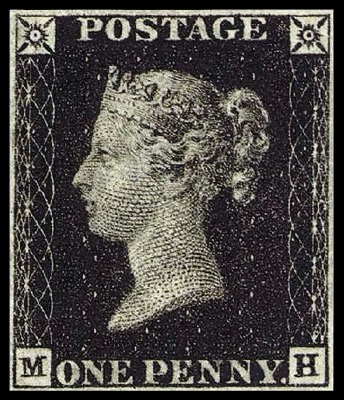
Pregnancy and the early months with a newborn are full of unpredictable waiting: medical appointments, feeding sessions, naps that end without warning. Stamp collecting fits around that unpredictability better than most hobbies, because a session can last five minutes or an hour and nothing is ruined if you have to put it down.
The hobby is also quiet, inexpensive to start, and easy to pick up again during parental leave, when free time arrives in short, unscheduled bursts rather than long stretches. Unlike a hobby that needs a finished block of concentration, sorting a few stamps, checking a watermark, or filing a cover into a stockbook can happen in the gaps between other tasks. If this is your first time holding a pair of stamp tongs, a beginner's guide to stamp collecting covers the basics, from handling stamps correctly to reading a catalogue entry.
How do you start a stamp collection before the baby arrives?
The simplest way to begin is to pick one small, specific focus rather than trying to cover every country and era at once. A country you have family ties to, a subject you already love, or the year your baby is due are all reasonable starting points.
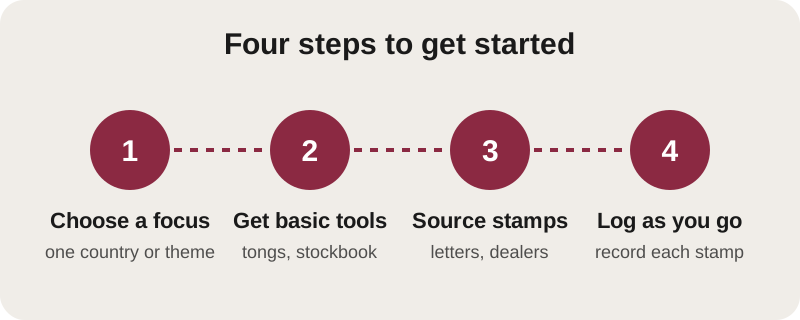
- Choose a focus. One country, one topic, or one time period keeps the project manageable in short sessions.
- Buy basic tools. Stamp tongs, a stockbook, and a magnifier are enough to begin properly.
- Source stamps. Old family letters, dealer approval packets, and estate lots are easy, low-cost places to find stock.
- Log as you go. Note the country, year, and condition of each stamp before it goes into the stockbook.
Use a stockbook or hingeless album rather than a loose folder. Pages that close securely matter more than ever once small hands start reaching for things, and a bound stockbook also travels better to prenatal appointments or a hospital bag than loose pages ever could.
How do you build a birth-year collection for your child?
A birth-year collection gathers stamps issued in the calendar year your child is born, which makes a straightforward project to work on during pregnancy. It gives you a clear boundary: you are not trying to collect everything a country has ever issued, only what came out in twelve months.
Consider pairing the stamps with a first day cover from the same year, since a cover's postmark pins the collection to an exact date rather than a vague twelve-month window. Our guide to first day covers explains what to look for when identifying or buying them, and the same catalogue habits apply once you start grading condition for the pieces you keep. Note whether each stamp is MNH or MH, since that distinction affects how you store and present it later, and a collection kept consistently in one condition standard reads more clearly once your child is old enough to appreciate it.
How do you keep a stamp collection safe once baby arrives?
Babies crawl, pull, and put things in their mouths, so storage habits that were fine when it was just you deserve a second look before the due date. Stamps, glassine envelopes, and loose hinges are small, thin, and exactly the kind of object that ends up on the floor and then in a baby's hand.
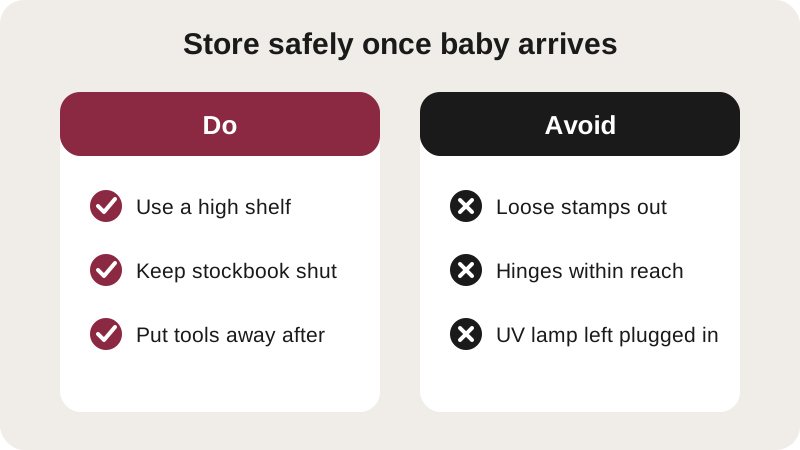
Move your working area to a shelf or cabinet above crawling height, and keep the stockbook closed between sessions rather than left open on a table. Safe stamp storage with a baby in the house really comes down to habit: close things as you finish with them, and never leave a loose stamp on a low surface "just for a minute." Our guide to storing and preserving a stamp collection covers humidity, light, and album choice in more detail.
What supplies do you actually need as a new collector?
You do not need a full set of specialist equipment before the baby arrives. A handful of tools covers almost everything a beginner needs to get started properly, and most of it fits in a single small box.
- Stamp tongs for handling stamps without fingerprints or creases.
- A stockbook or hingeless album for storage that does not rely on a stamp hinge or stamp mount.
- A perforation gauge and magnifier for basic identification work.
- Glassine envelopes for sorting loose stamps before they are filed.
As the collection grows, learning to tell MNH from MH condition, and understanding centering and watermark identification, will help you record each piece accurately rather than guessing.
How can you keep collecting once free time gets scarce?
Once the baby arrives, the hobby does not need to stop; it just needs to shrink into smaller pieces. Set the stockbook on a high shelf, pull it down for a ten-minute session during a nap, and put it straight back when you are done. Consistency matters more than session length.
| Stage | Realistic session | What to do |
|---|---|---|
| Late pregnancy | 20-60 minutes | Sort stock, catalogue new stamps, plan the birth-year focus |
| Early newborn weeks | 5-15 minutes | File a few already-identified stamps, check one watermark |
| Parental leave, baby mobile | 10-20 minutes | Work away from the floor, pack tools back up each time |
The app can help here too: photograph a stamp and it will suggest the country of origin, year of issue, and catalogue numbers, which speeds up logging during the short windows of free time that come with a newborn in the house. That kind of quick identification turns a ten-minute pocket of time into real progress, rather than a session spent flipping through a printed catalogue looking for a match.
Is stamp collecting a realistic hobby for expecting parents?
Yes. Sessions can last five minutes or an hour and nothing is lost if you stop mid-task, which suits the unpredictable schedule of late pregnancy and newborn life far better than hobbies that need long, uninterrupted blocks of time.
What is a birth-year stamp collection?
It is a collection built around stamps issued in the calendar year your child is born, from one country or several. The clear time boundary makes it manageable to start during pregnancy and gives the finished collection a built-in meaning for your child later.
How do I keep a stamp collection safe once a baby arrives?
Store stockbooks, tongs, and glassine envelopes on a shelf above crawling height, keep albums closed between sessions, and unplug tools like a UV lamp when not in use. Small, thin paper items are exactly what crawling babies reach for.
What supplies do I actually need to start?
Stamp tongs, a stockbook or hingeless album, a magnifier, and a few glassine envelopes cover most beginner needs. You can add a perforation gauge and watermark detection tools later, once you know which area of collecting you want to focus on.
Can an app help me identify stamps while I collect?
Yes. Photographing a stamp can return its likely country of origin, year of issue, and catalogue numbers, which saves time when you only have a short window to work before the baby wakes.