A practical guide to identifying, cataloguing, grading, and storing a rare stamp collection using catalogue numbers, watermarks, and condition checks rather than guesswork about age.
Quick answer
A rare stamp collection is identified by catalogue number, watermark, plate, and condition — not simply by age. Confirm each stamp against a standard catalogue, record its grade, and store it away from light and humidity to protect its status.
Key takeaways
- Rarity depends on catalogue number, watermark, and condition, not just age.
- Confirm identification with a loupe, UV lamp, and perforation gauge before assuming rarity.
- Record each stamp's Scott, Stanley Gibbons, or Michel number and its MNH or MH status.
- Use stamp tongs and acid-free mounts; never handle rare stamps with bare fingers.
- Store confirmed rarities in a stockbook or hingeless album away from light and humidity.
A rare stamp collection is built from stamps you can prove are rare — confirmed by catalogue number, watermark, plate, and condition — not simply because they look old. This guide walks through how to identify genuine rarities, catalogue them correctly, grade their condition, and store them so nothing is damaged before you even realise what you have.
What actually makes a stamp rare?
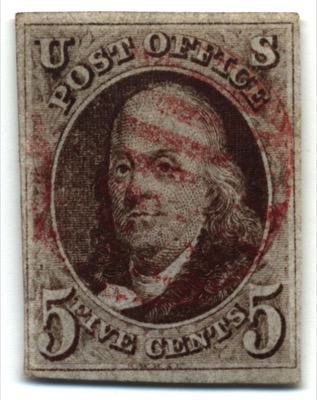
Age alone rarely makes a stamp rare. What matters is a combination of specific printing details: the plate it came from, the watermark in the paper, the perforation pattern, and whether it survived in genuine mint or used condition.
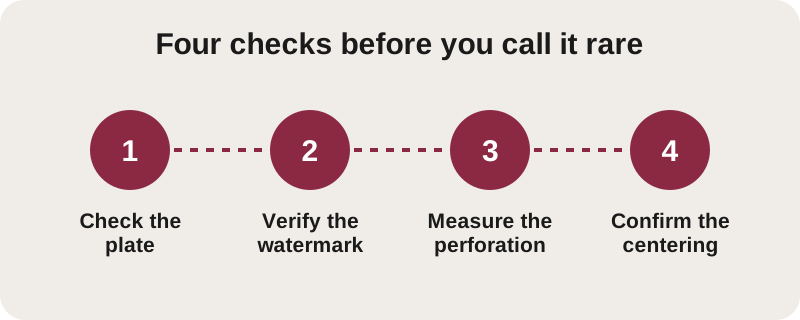
Classic examples show why these details matter more than age. The British Guiana 1c magenta is identified by its specific printing and the physical history of the single known copy, not by belonging to an old era in general. The Inverted Jenny is rare because of a printing error — an inverted vignette — not because every early air mail stamp is scarce. Even the Penny Black, issued 1 May 1840 and engraved from a profile by William Wyon, is only exceptional in certain states: collectors track plates 1 through 11 separately, because the plate changes how a specific stamp is classified and valued within the issue.
Printing errors are a separate route into rarity altogether. Colour shifts, missing perforations, and inverted designs can turn an otherwise ordinary issue into one of the most sought stamps from its period. If you suspect an error, compare it carefully using the guide to postage stamp errors before assuming it is simply a printing defect with no significance.
If you are assembling a themed group rather than chasing scarcity for its own sake, a thematic stamp collecting approach can still surface genuinely rare material, since early thematic issues often carry scarce plate varieties or overlooked errors.
How do you confirm a stamp in your collection is actually rare?
Before you treat any stamp as rare, run it through the same checks a dealer would use: magnification, watermark detection, and a measured comparison against catalogue listings.
- Check the watermark. Hold the stamp to a UV lamp or use watermark fluid to reveal a pattern invisible in normal light.
- Measure the perforation. Count the teeth across 2 centimetres with a gauge; small differences separate common printings from scarce ones.
- Assess centering. Centering is one of the biggest swing factors in how a stamp is graded, regardless of how scarce the underlying printing is.
- Cross-reference the catalogue. Look up the stamp's number in Scott, Stanley Gibbons, or Michel — whichever system covers its country of origin — and compare every listed variety.
The app can speed up the first pass: photograph the stamp and get a likely identification, then confirm it against a catalogue lookup before going further with a loupe and gauge.
How should you catalogue a rare stamp collection?
Once a stamp is confirmed, record it properly so its rarity is not lost the next time someone — including future you — looks through the collection.
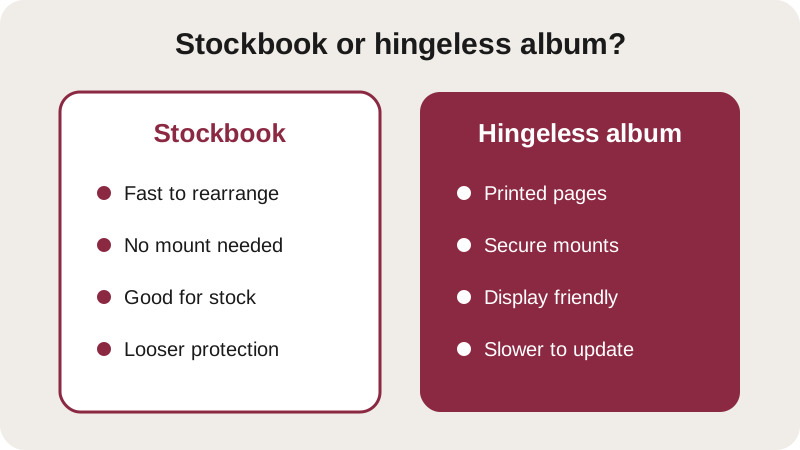
For each stamp, note the catalogue number, country, issue, condition grade, and whether it is MNH or MH. Mint never hinged stamps should never be pressed onto a page with a traditional stamp hinge; use a stamp mount instead so the gum stays undisturbed. Loose stamps waiting to be mounted belong in a glassine envelope, never loose in a drawer or box.
The three major catalogue systems are not interchangeable, so note which one you are using for each stamp:
| Catalogue | Primarily covers | Numbering style |
|---|---|---|
| Scott | United States and worldwide issues | Numeric, organised by country then chronology |
| Stanley Gibbons | British Commonwealth and worldwide issues | Numeric, often with letter suffixes for varieties |
| Michel | Germany and continental Europe | Numeric, with separate blocks for sets and sheets |
A written or digital log matters as much as the physical mount. If you ever need to price stamps for sale or get a second opinion, a clear record of catalogue numbers and condition saves time and avoids disputes about what the stamp actually is.
How do you store and protect a rare stamp collection?
Storage decides whether a rare stamp stays rare or gets quietly downgraded by handling damage, light, or humidity.
- Always lift stamps with stamp tongs, never bare fingers — skin oils stain paper and gum over time.
- Keep the collection in a stable, dry room out of direct sunlight; both heat and damp accelerate gum and paper deterioration.
- Separate confirmed rarities from the general stock so they are not mixed in with duplicates during a routine sort.
- Review your stamp storage and preservation setup at least once a year, especially after a move or a change in climate.
What mistakes put a rare stamp collection at risk?
Most damage to rare stamps happens gradually, through small habits rather than one dramatic accident.
- Mounting mint stamps with a hinge. A hinge mark turns MNH into MH permanently, so always check gum status before mounting anything.
- Skipping the catalogue check. Assuming a stamp is rare because it is old, foreign, or unfamiliar, without confirming the watermark or plate.
- Poor environment. Storing albums in an attic, basement, or anywhere with swings in temperature or humidity.
- No documentation. Losing track of which catalogue number and grade applied to which stamp once a collection is inherited or merged with another.
If you have recently taken on a collection you did not build yourself, start with the basics in the guide on an inherited stamp collection before assuming anything in it is rare or common.
Where should you go from here?
Identification always comes before any other judgement about a stamp. Once you know exactly what a stamp is — its catalogue number, its printing, its condition — you can catalogue it correctly, store it properly, and decide later whether it belongs in a reference collection or eventually gets sold.
A rare stamp collection rewards patience more than luck. Most genuine rarities are found by collectors who check every stamp against the same standards every time, not by collectors who assume scarcity from age alone.
What makes a stamp collection rare rather than just old?
Age by itself rarely proves rarity. What counts is specific, verifiable detail: the correct plate, watermark, perforation, and a condition grade confirmed against a standard catalogue such as Scott, Stanley Gibbons, or Michel. Two stamps from the same old issue can differ enormously once those details are checked.
How can I tell if a stamp in my collection is actually rare?
Check the watermark under a UV lamp, measure the perforation against the standard 2 centimetre gauge, and look up the exact catalogue number for that printing. Compare centering and gum condition too. If all the specific details match a known scarce variety, you have good grounds to treat it as rare.
Should I remove stamp hinges from older mint stamps?
Only if you understand the risk: a hinge that has already left a mark cannot be undone, and removing one carelessly can tear thin paper. If a mint stamp is still unhinged, mount it with a stamp mount instead of a hinge so it stays MNH rather than becoming MH.
What's the best way to store a rare stamp collection?
Keep confirmed rarities in acid-free mounts inside a hingeless album or stockbook, in a stable, dry room away from direct sunlight. Always move stamps with stamp tongs rather than fingers, and keep loose stamps in a glassine envelope until they are properly mounted and catalogued.