A guide to starting and maintaining a stamp collection as a graduate student, covering budget tools, short-session scheduling, small-apartment storage, and how research habits transfer to stamp identification.
Published
Quick answer
Stamp collecting for graduate students works best as a tightly scoped hobby: pick one country, era, or theme, store stamps in a stockbook with glassine envelopes, and use an app to identify and catalogue finds in minutes between classes.
Key takeaways
- Narrow your collection to one country, era, or theme so research time stays manageable.
- A stockbook and glassine envelopes cost little and protect stamps in a small apartment.
- Catalogue stamps as you collect them instead of saving sorting for a free weekend.
- Treat identification like source work: watermarks and catalogue numbers are your citations.
- Store the collection away from heat, humidity, and direct light, even in shared housing.
Stamp collecting for graduate students works best as a tightly scoped hobby: pick one country, era, or theme, and build a small, well-organised collection instead of a sprawling one you don't have time to manage.
How can stamp collecting fit into a graduate student's schedule?
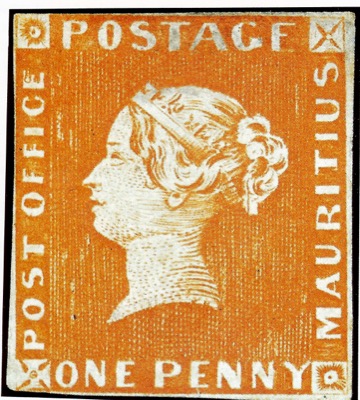
Most graduate students already protect blocks of time for research, teaching, and grading, so the hobby has to slot into the gaps rather than claim its own weekend. The trick is treating each session like a short research sprint: one task, one stack of stamps, a clear stopping point.
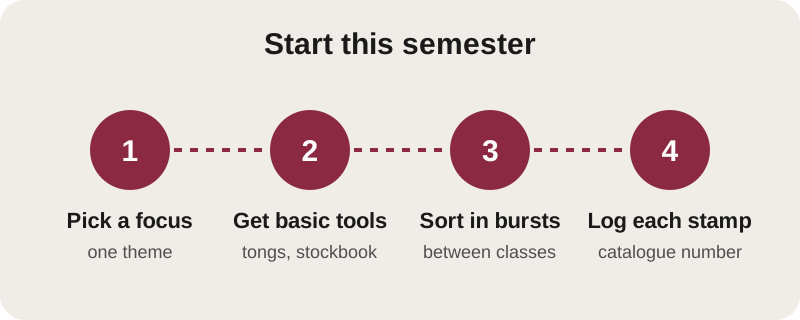
Fifteen minutes between a seminar and office hours is enough to sort a glassine envelope of duplicates, check centering on a handful of stamps, or run two or three through the app to confirm country and year. Save longer stretches — a study break, a library closing slowly on a Friday — for cataloguing, where you log catalogue numbers and condition notes in one sitting.
Cataloguing stamps in grad school works best when it mirrors the systems you already use for research: consistent labels, dated entries, nothing left half-recorded. Students who already keep a reference manager for a dissertation tend to pick up stamp cataloguing quickly, because the discipline is the same. For more on building that habit early, see our guide to getting started with stamp collecting.
What's the cheapest way to start collecting stamps on a student budget?
You need four inexpensive items before anything else: a pair of stamp tongs, a basic stockbook, a stack of glassine envelopes, and a catalogue reference such as Scott, Stanley Gibbons, or Michel. None of these require a lab budget, and all of them last for years.
- Buy a pair of stamp tongs so you stop handling stamps with your fingers, which transfers oil and can leave creases.
- Start with a plain stockbook rather than a hingeless album — it's cheaper and more forgiving while you're still deciding what to collect.
- Sort incoming stamps into glassine envelopes by country or theme as soon as you get them, before they pile up on a desk.
- Pick one catalogue system — Scott, Michel, or Stanley Gibbons — and record catalogue numbers consistently from the start.
Resist the urge to buy an album before you know what you're keeping. A stockbook holds loose stamps safely and lets you reorganise as your interests narrow, which matters when your first few months of collecting on a student budget are really a trial run. Once you've settled on a focus — a topical collection, a single country, or a specific period — a proper album becomes worth the investment.
Learning to use your tools properly matters as much as owning them. A quick read of how to use stamp tongs safely prevents the creases and tears that are easy to introduce when you're sorting quickly between classes.
How do you store a stamp collection in small shared housing?
Apartment living usually means no dedicated study, no climate-controlled room, and a roommate who will set a mug down wherever there's space. Stamp collecting small apartment storage comes down to picking containers that are stable on their own, rather than depending on a room that stays cool and dry.
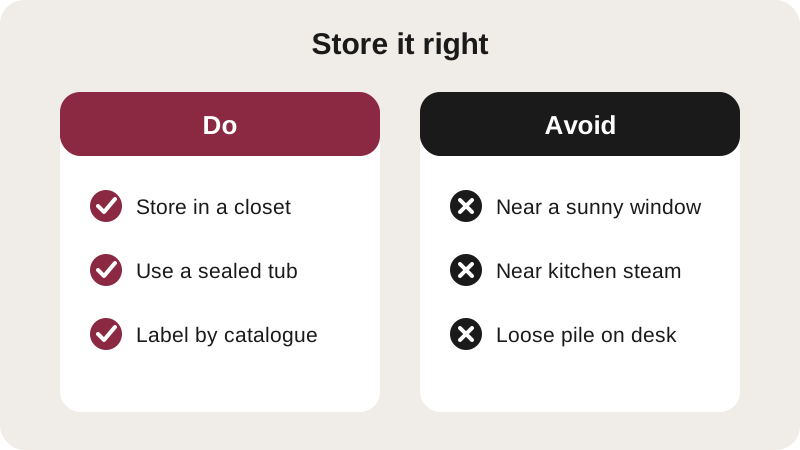
Keep the stockbook or album in a closet rather than near a window, a radiator, or a kitchen with steam from cooking. Humidity and direct light are the two things that degrade paper and gum fastest, and both are common in small rentals. A sealed plastic tub for the stockbook, kept somewhere with stable temperature, does most of the protective work a dedicated room would otherwise do.
Label storage by catalogue number and country, not by when you acquired each stamp — that way a move between apartments, or a summer spent away from campus, doesn't scramble an organisation system you'd otherwise have to rebuild from memory. Our full guide to storing and preserving a stamp collection covers humidity, light, and handling in more depth.
Can research skills from graduate school help with stamp identification?
Yes — the instincts you use to verify a primary source transfer directly to verifying a stamp. Checking a watermark, measuring perforations against a gauge, and confirming a catalogue number against a reference are the philatelic equivalent of checking a citation against its original source.
Famous stamps like the Inverted Jenny or the British Guiana 1c magenta are notable partly because their identifying details were documented and cross-checked for decades, the same rigor you'd apply to a contested archival claim. You don't need rarities like those to practice the method: any inherited envelope of mixed-country stamps is enough to apply it. Identify the country first, then the issue, then the specific printing, using plate traces where they exist — certain classic issues were produced from plates 1–11, each leaving slightly different marks under a magnifier or a UV lamp.
This is where the identification step benefits most from a shortcut. Instead of flipping through a thick catalogue between office hours, a photo through the app can confirm country of origin, year of issue, and likely catalogue numbers in seconds, leaving your limited free time for the parts of the hobby that are actually enjoyable: sorting, grading, and building a themed run. Our stamp identification guide and guide to identifying a stamp's country of origin cover the manual method in full, for the stamps you want to work through by hand.
If you want structured study alongside the hobby, a short online philately course can be worth the handful of hours it takes, especially one organised like a seminar: discrete modules you can finish between terms rather than a single long commitment.
None of this requires more money or more free time than you already have. A graduate student's stamp collection succeeds the same way a thesis chapter does: narrow scope, consistent documentation, and steady short sessions rather than one long push.
Is stamp collecting expensive for a graduate student?
It doesn't have to be. A pair of stamp tongs, a basic stockbook, a stack of glassine envelopes, and one catalogue reference (Scott, Michel, or Stanley Gibbons) cover the essentials, and most of these last for years without replacement.
What's the best way to store stamps in a small apartment?
Keep a plain stockbook or album in a closet, away from windows, radiators, and kitchen steam. A sealed plastic tub adds a second layer of protection against humidity, which is the biggest threat to paper and gum in a small rental.
How do I identify a stamp without spending hours in a library catalogue?
A photo through the app can confirm country of origin, year of issue, and likely catalogue numbers quickly, leaving your limited free time for sorting, grading, and building the parts of the collection you actually chose to focus on.
Should I use stamp hinges or stamp mounts?
Use a stamp mount if you want to keep mint stamps MNH. A stamp hinge leaves a mark that reclassifies a stamp as MH, which is fine for working copies but not for anything you want to keep in its original unhinged state.
How do I keep a collection safe when moving between apartments or cities?
Store loose stamps in glassine envelopes inside a stockbook rather than a loose pile, and label everything by catalogue number and country rather than by acquisition date, so the system survives a move without needing to be rebuilt from memory.