This article explains what a standard perforation gauge is, how to measure one with a gauge tool, which measurements show up most often, and how compound or non-standard perforations differ.
Published
Quick answer
Standard perforations are the gauge measurements—usually between perf 10 and perf 15—that a catalogue such as Scott, Stanley Gibbons, or Michel lists as normal for a stamp issue. Anything different on the same design counts as a variety, not the standard printing.
Key takeaways
- Standard perforations are the gauge Scott, SG, and Michel list as normal for an issue.
- Measure gauge over 2 centimetres with a perforation gauge, checking every edge.
- A compound perforation (different gauge per side) is a variety, not the standard.
- Centering and perforation condition both affect how a stamp grades.
- Catalogue numbers help confirm whether your stamp matches its standard perf.
Standard perforations are the specific gauge measurements—most often somewhere between perf 10 and perf 15—that a catalogue lists as the normal printing for a given stamp issue. Anything measured differently on the same design is a variety, not the standard.
What counts as a "standard" perforation?
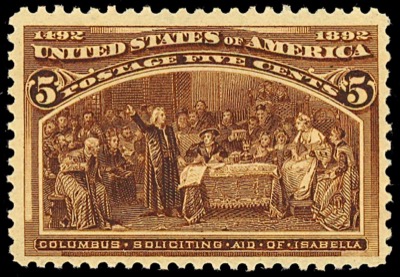
When Scott, Stanley Gibbons, or Michel catalogue a stamp issue, they record one perforation gauge as the expected measurement for that printing. That number becomes the standard for the issue: it's what most surviving copies will measure, and it's the figure printed next to the basic catalogue listing. A stamp that matches this gauge on every edge is simply the ordinary printing of its design, nothing more and nothing rarer.
Perforation varieties exist precisely because printers sometimes swapped equipment, used a different machine for a later printing, or ran part of a sheet through a second perforator by mistake. When that happens, the resulting stamps usually get their own separate line in the catalogue, often with a note about the unusual gauge. Learning to recognise the standard gauge for an issue is the first step toward spotting these rarer printings, which is covered in more depth in a general guide to stamp perforations.
How do you measure perforation gauge?
A perforation gauge works by counting how many perforation holes fit across a fixed span of 2 centimetres along the edge of a stamp. Printed card gauges, metal gauges, and digital gauges all use this same counting method, just with different levels of precision.
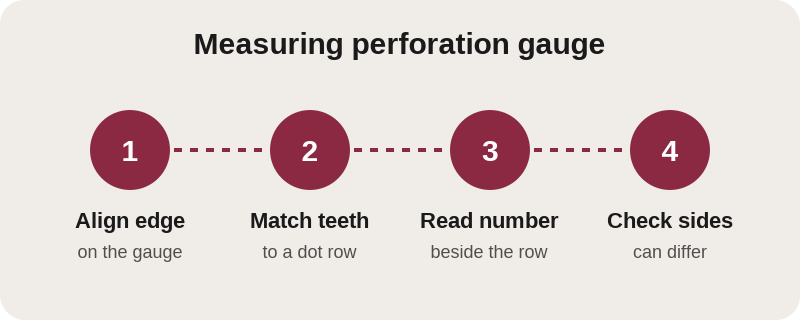
- Lay the stamp face up against the gauge, with one edge touching the printed rows of dots.
- Slide the stamp up or down until the perforation teeth line up evenly with one row.
- Read the number printed beside that row — that is the gauge for that edge.
- Repeat on the opposite edge and on both side edges, since the gauge can differ by direction.
A stamp magnifier held alongside the gauge makes it much easier to see exactly where each tooth sits, especially on worn or softly printed perforations.
Which perforation measurements are considered standard?
Across most of philately, a handful of gauges account for the vast majority of issues. Catalogues note the exact standard for each stamp, but these measurements turn up again and again across different countries and eras.
| Perforation gauge | Where it is most common |
|---|---|
| Perf 10 | Many early coil issues, with wider tooth spacing |
| Perf 11 | Widely used on classic-era issues worldwide |
| Perf 12 | One of the most frequently listed standard gauges |
| Perf 13 | Common on many European definitive series |
| Perf 14 | Standard for a large share of British and Commonwealth issues |
These are tendencies, not rules. Always check the catalogue entry for the specific issue in front of you, since the same design can sometimes appear with more than one standard gauge across different printings or years.
What is a compound perforation, and why does it matter?
A compound perforation occurs when a stamp measures one gauge on two opposite edges and a different gauge on the other two. Instead of a single uniform number, you end up recording something like "perf 11 by perf 14," describing the horizontal and vertical measurements separately.
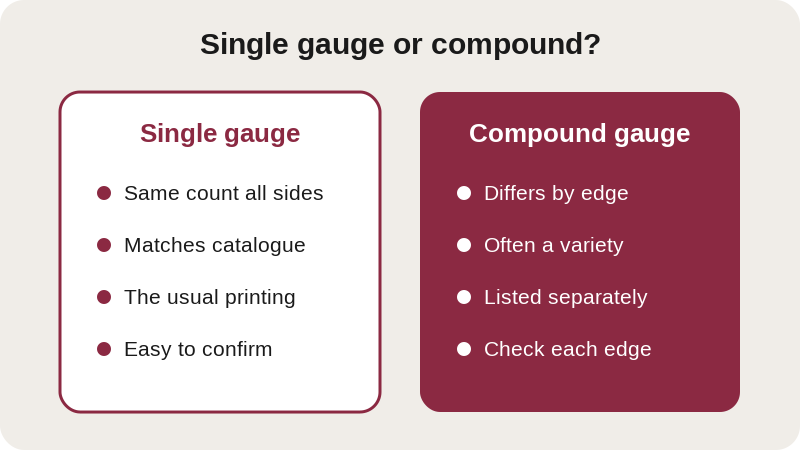
Compound perforations usually arose because a printer's machinery perforated one direction with one head and the other direction with a second head, and the two heads were not matched. Because this takes a specific combination of equipment, compound-perforation stamps are generally scarcer than the plain, single-gauge standard printing of the same design, and catalogues list them as distinct entries.
How do perforations affect grading and value?
The gauge number itself does not raise or lower a stamp's grade. What matters for grading is the condition of the perforations and how the design sits inside them. Centering — how evenly the printed design is framed by the perforated margins — is one of the single biggest factors in stamp condition grading, alongside the state of the gum (MNH or MH), any watermark, and overall surface wear.
Collectors assembling plate blocks pay particularly close attention to centering and perforation condition, since a block with ragged or trimmed teeth on one corner stamp can undercut the whole unit. A stockbook or hingeless album with individual mounts also protects perforated edges far better than loose storage, where teeth can catch and tear.
Can technology help confirm a stamp's perforation?
A physical gauge remains the only reliable way to measure a perforation directly, but identifying the issue first makes the job much easier. Once you know a stamp's country of origin, year, and catalogue number, you know exactly which gauge the catalogue expects, so you are measuring to confirm rather than guessing blind.
The app can identify a stamp from a photo and surface that catalogue information, narrowing down the standard perforation before you ever pick up a gauge. Pair that identification with a physical check of every edge, and you have a complete picture of whether your stamp matches its standard printing or belongs to a rarer compound or off-gauge variety.
Whichever method you use, keep a written record of the gauge you measure alongside the catalogue number. A simple note in your stockbook or album saves you from remeasuring the same stamp twice, and it builds a reliable reference as your collection grows.
What does 'standard perforation' mean for a stamp?
It's the gauge measurement a catalogue lists as typical for that specific printing, usually one consistent number such as perf 12 or perf 14. A stamp from the same issue that measures differently on any edge is treated as a variety rather than the standard printing.
How do I measure a stamp's perforation gauge?
Lay the stamp against a printed or digital perforation gauge and slide it until the teeth line up with a row of dots, which are spaced to count how many holes fit across 2 centimetres. Check the top, bottom, and side edges separately, since they can differ.
Why do some stamps have a compound perforation?
Printers sometimes switched perforating equipment partway through a print run, or ran sheets through more than one machine, producing one gauge on two sides and a different gauge on the others. Catalogues usually list these compound-perforation stamps separately because they are scarcer than the standard printing.
Does perforation gauge affect a stamp's grade?
The gauge itself isn't a grading factor, but the condition of the perforations is. Centering relative to the perforated edges, missing or rounded teeth, and signs of reperforation all influence a stamp's grade, alongside watermark and overall surface condition.
Can a scanning app tell me the perforation type?
An app can identify a stamp from a photo and surface its country, year, and catalogue number, which points you to the standard perforation listed for that issue. You still need a physical gauge to confirm the actual measurement on your own copy.