Identifying rare stamps by country means matching design, watermark, perforation, and printing details against the correct national catalogue rather than judging by age or appearance alone.
To identify rare stamps by country, start with the design and inscription to confirm the issuing nation, then check watermark, perforation, and printing method against that country's specific catalogue listings. Country alone never makes a stamp rare — the exact printing, paper, and condition within that country's output does.
Many collectors assume age or nationality is the shortcut to value. It isn't. A common 1930s definitive from a major country is worth far less than a scarce printing variety from the same set. Identifying rare stamps by country means learning to read the details that separate an ordinary issue from a genuinely scarce one.
How do I confirm which country issued a stamp?
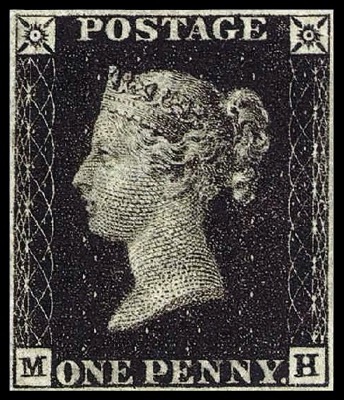
Most stamps carry their country name somewhere in the design, but not always in English, and not always clearly. Some nations use classical or historical names instead of the modern one. Others, notably the earliest British issues, carry no country name at all, since Britain was the first to issue postage stamps and never needed to distinguish itself from anyone.
Work through these clues in order:
- Inscription: Look for the country name, even abbreviated or in a national language.
- Monarch or head of state: A specific portrait can date and place a stamp precisely, as with the profile of a young Queen Victoria used to identify early British issues.
- Currency shown: Denominations in centimes, pfennig, or reales point toward specific countries and eras.
- Script and typography: Cyrillic, Arabic, or specific Latin-script conventions narrow the region quickly.
For a full walkthrough of this process, see our guide to identifying a stamp's country of origin.
Why does the same design mean different things in different countries?
Once you know the country, rarity comes from details within that issue: which printing plate was used, which paper and watermark, and which perforation gauge. This is why two visually identical stamps from the same country can have very different status. A perforation difference of a fraction of a measurement, checked against a 2 centimetre gauge span, can separate a common printing from a scarce one.
Country-specific guides matter here because each nation's printing history follows its own pattern. British issues are often tracked by plate number, with plates 1 to 11 used across early Penny issues, some far scarcer than others. Our guide to identifying the Penny Black walks through plate identification using the engraving by William Wyon and the original 1 May 1840 issue as a reference point.
Other countries use watermark rather than plate number as the key differentiator. Brazilian, Chinese, Dutch, and Swedish stamps each have their own watermark patterns worth learning if you collect those countries specifically — see our guides on identifying Brazilian, Chinese, Dutch, and Swedish stamps by watermark.
Which catalogue system should I use for a given country?
Catalogue numbering is not universal, and using the wrong system will make cross-referencing rarity almost impossible. Three major systems cover most of the market:
| Catalogue | Primary coverage |
|---|---|
| Scott | United States and the Americas, widely used as a general reference |
| Stanley Gibbons | Britain and British Commonwealth countries |
| Michel | Germany, Austria, and German-speaking Europe |
A stamp's catalogue number tells you far more than its picture does. It links to a specific printing, paper type, and known variety list for that country. If you collect stamps from a particular nation seriously, it is worth owning or regularly consulting the catalogue that specializes in it rather than relying only on a general one.
We cover country-specific identification and market context in separate guides, including collecting Australian stamps, Belgian stamps, and Swiss stamps, each with the identification points particular to that country's printing history.
What separates a rare stamp from a common one within a country?
Within any country's output, three factors repeatedly separate rarity from the ordinary:
- Printing errors: Missing colors, inverted centers, or wrong denominations. The most famous example, the Inverted Jenny, shows how a single printing mistake within an otherwise common issue can create an entirely different category of stamp. Our guide to postage stamp errors covers how to spot these systematically.
- Limited or early printings: Early colonial issues, provisional overprints, or short print runs within a country's history, such as the case of the British Guiana 1c magenta, illustrate how a single country's postal history can produce an item unlike anything else it issued.
- Condition: Centering, gum status, and paper condition all matter enormously. A stamp graded MNH (mint never hinged) is treated very differently from one graded MH (mint hinged) even within the same printing. Our grading guide and condition ratings explained article cover this scale in detail.
None of these factors can be judged by country alone. A rare printing variety and a common definitive from the same nation can look nearly identical to an untrained eye.
How should I record and store stamps once I've identified their country and issue?
Once you've confirmed a stamp's country, catalogue number, and condition, record it properly so the identification isn't lost. Use stamp tongs rather than fingers to avoid damaging the paper or gum, and store confirmed rarities in a stockbook, glassine envelope, or hingeless album rather than loose in a drawer. A UV lamp can help confirm paper and watermark details that are invisible in normal light, which is especially useful when a country issued near-identical stamps on different paper stocks across print runs.
Keep a written or digital record of each stamp's country, catalogue number, watermark, and perforation measurement. This turns a pile of loose stamps into a properly organized collection, and it makes it far easier to spot which of your holdings actually deserve closer attention. The app can help with the first identification pass by matching a photograph against a reference database, narrowing down country and issue before you confirm the details by hand against a catalogue.
Identifying rare stamps by country is ultimately a process of elimination: confirm the nation, confirm the exact printing within that nation's history, then confirm the condition. Skip any one of those three steps and you risk overestimating a common stamp or, just as often, missing a genuinely scarce one sitting in plain sight.
What is the fastest way to tell which country issued a stamp?
Start with the inscription. Many countries print their name in Latin script, but some, like older French or Spanish colonial issues, use abbreviations, and some, like early British stamps, carry no country name at all and must be identified by the monarch's portrait or design style instead.
Do I need a different catalogue for every country?
Serious identification usually means cross-referencing at least one major catalogue system, such as Scott for the Americas, Stanley Gibbons for the British Commonwealth, or Michel for German-speaking Europe, since numbering and variety listings differ between them.
Can watermarks really tell me which country a stamp is from?
Yes. Many nations used watermarked paper unique to their printings, and the watermark pattern combined with perforation gauge often narrows a stamp down to a specific printing or period within that country's output, which is essential for telling common issues from scarce ones.
Does an app replace the need for a catalogue when identifying stamps by country?
The app speeds up the first step by matching a photo against a large reference set to suggest the country and issue, but confirming rarity still requires checking watermark, perforation, and printing details against a catalogue entry for that specific stamp.