An AI stamp identifier uses image recognition to match a photographed stamp against known designs and narrow down its country, series, and issue date, but it still leaves grading and condition assessment to the collector.
An AI stamp identifier is a tool that scans a photograph of a stamp and matches it against a database of known designs to tell you its country, series, and likely issue date. It works by comparing colour, layout, and printed text against thousands of reference images rather than by looking up a catalogue number you already know.
For most collectors, the hard part of identification was never spotting that a stamp exists. It was narrowing down which country issued it, which year, and which of several near-identical printings it belongs to. That is exactly the gap this kind of tool is built to close.
How does an AI stamp identifier actually work?
The app captures a photo of the stamp and analyses its visual features: the portrait or design, the frame pattern, the denomination, the language of any text, and the overall colour. It compares these against a large set of reference images and returns the closest matches, usually ranked by confidence.
This is pattern matching, not magic. It works well when a stamp's design is distinctive and the photo is clear. It struggles when two issues look almost identical and differ only in a technical detail like watermark or perforation gauge, because those details are not always visible in a standard photograph.
That's why identification tools work best as a starting point. They get you from "unknown stamp" to "probably this country, this decade, this series" in seconds, which used to take flipping through pages of a printed catalogue by hand.
What can an AI stamp identifier tell you, and what can't it?
Try the free stamp scanner
Photograph any stamp and let StampScan identify it and add it to your digital collection.
Get StampScan FreeIt can tell you, with reasonable confidence:
- Country of origin, based on language, currency, and design conventions
- Approximate era, based on printing style and design trends
- Likely series or theme, if the design matches a known set
- Candidate catalogue numbers to check against references like Scott, Stanley Gibbons, or Michel
It generally cannot tell you, from a photo alone:
- Condition or grade — centering, gum state, and faults need direct examination
- Exact value — value depends on condition, not just identity
- Certain watermarks — some are faint and need a light table or watermark fluid to confirm
- Fine perforation differences — these need a physical gauge measuring against 2 centimetres of edge
If your stamp is a plain, common issue, identification alone may answer most of your questions. If it looks like it could be a scarce printing, plan on a second manual check before drawing conclusions. The guide on spotting fake stamps is a useful next stop if something about the design looks slightly off from the reference image.
How do you get a good photo for stamp identification?
Photo quality decides how well any identifier — AI or human — can do its job. A few habits make a real difference:
- Use even, diffused light. Natural daylight near a window works well. Avoid direct flash, which creates glare and hides fine engraving detail.
- Fill the frame. Get close enough that the stamp takes up most of the photo, without cropping off any edge or corner.
- Shoot straight on. An angled shot distorts proportions and can throw off design matching.
- Use a plain, contrasting background. A white or black sheet of paper behind the stamp makes edges and perforations easier to read.
- Photograph both sides if relevant. Gum condition and any markings on the back can matter for later grading, even if identification only needs the front.
Once you have a clear photo, the app can usually surface the right match within a handful of suggestions, particularly for common issues. For a closer look at the mechanics of scanning, see the guide on using a stamp scanner to identify stamps from a photo.
Why does identification matter more than age?
A stamp's age tells you almost nothing on its own. What matters is precisely which printing, which plate, and which condition you're holding. Two stamps that look identical to the naked eye can belong to entirely different printings — separated by a plate number, a watermark variety, or a subtle colour shift — and only one of them might be scarce. This is why the Penny Black, for example, is identified not just by its portrait of Queen Victoria engraved from a design by William Wyon, but by details down to which of plates 1–11 produced it. See the full breakdown in the guide on identifying the Penny Black.
An AI identifier shortens the first stage of this process by ruling out the many designs your stamp clearly isn't. That leaves you free to spend your attention on the details that actually decide identity: watermark, perforation, and plate characteristics.
What should you do after identification confirms what you have?
Once you know what a stamp is, three things decide how it should be treated going forward:
| Step | Why it matters |
|---|---|
| Check condition and centering | Determines grade, independent of what the stamp is |
| Confirm MNH or MH status | Mint never hinged and mint hinged are graded very differently |
| Store it correctly | A glassine envelope, stamp mount, or hingeless album protects the surface and gum |
Handle the stamp with stamp tongs rather than fingers to avoid oils and creases, and keep it in a stockbook or album page rather than loose. If you suspect a watermark variety is involved, a UV lamp or watermark fluid check will confirm what identification alone could only suggest. For a full walkthrough of grading once identity is settled, see the guide on grading stamps like a pro.
Is an AI stamp identifier worth using for a whole collection?
For sorting a large or inherited collection, yes — it saves the time of manually checking each stamp against a printed catalogue page by page. It won't replace catalogue numbers for record-keeping, and it won't grade condition, but it gets you from a shoebox of unsorted stamps to organised groups by country and series much faster than doing it by hand.
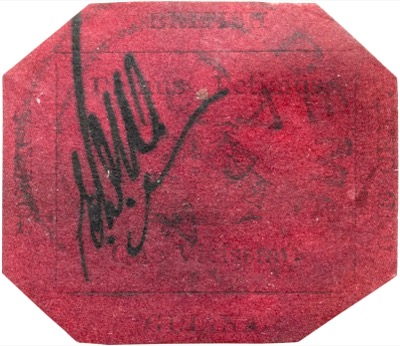
From there, cataloguing by hand (or in the app) with correct Scott, Stanley Gibbons, or Michel numbers turns a sorted pile into an actual reference collection. Famous names like the Inverted Jenny or the British Guiana 1c magenta are extreme examples of why precise identification matters — vanishingly rare stamps are only recognised as such because someone checked the fine details rather than assuming from a glance. Most collections won't contain anything that rare, but the habit of checking carefully is the same either way.
Try the free stamp scanner
Photograph any stamp and let StampScan identify it and add it to your digital collection.
Get StampScan FreeHow accurate is an AI stamp identifier?
Accuracy depends on photo quality and how distinctive the design is. Common stamps with clear designs are usually matched quickly, while stamps that differ only by watermark or perforation often need manual confirmation with a gauge or watermark fluid alongside the app's suggestion.
Can an AI stamp identifier tell me what my stamp is worth?
No. Identification tools narrow down what a stamp is: its country, series, and issue. Value depends heavily on condition, centering, and gum state, which require separate grading. See a dedicated guide on determining stamp value for that step.
Do I need good lighting to scan a stamp?
Yes. Even, diffused light without glare gives the clearest image for recognition. Avoid direct flash, which can wash out fine engraving detail and make similar-looking issues harder to tell apart.
Can AI identification replace a watermark check?
Not fully. AI can suggest which watermark variety is likely based on the visible design and country, but confirming it still requires holding the stamp to a light table or using watermark fluid, since watermarks are not always visible in a photo.