A practical starting guide covering the tools, habits, and organisation methods a new stamp collector needs before spending money on rare stamps.
To start collecting stamps for beginners, gather a few basic tools, decide on a simple focus, and begin sorting the stamps you already have before buying anything rare. Everything else in the hobby builds on that foundation.
Stamp collecting rewards patience more than money. A shoebox of stamps from old letters, a stockbook, and a pair of tongs is enough to start learning the habits that matter: careful handling, accurate identification, and honest assessment of condition. This guide walks through what to buy first, how to organise what you find, and how to avoid the mistakes that trip up most new collectors.
What tools does a beginner actually need?
You do not need much to start. A small starter kit covers almost everything:
- Stamp tongs: flat-tipped tweezers for handling stamps without touching them with your fingers, which can leave oils that stain paper over time
- A stockbook: a book of clear pockets for holding loose stamps before you decide how to mount them permanently
- Glassine envelopes: small translucent paper envelopes for storing stamps you haven't sorted yet
- A perforation gauge: a simple printed card for measuring the teeth along a stamp's edge, useful once you start telling similar stamps apart
- A magnifying glass: for checking fine printing detail and spotting damage
A hingeless album and a UV lamp are worth adding later, once you know which direction your collecting is heading. Hinges and mounts come up early too: a stamp hinge is a small gummed strip used to attach a stamp to an album page, while a stamp mount is a clear plastic sleeve that holds the stamp without gumming it directly to the page. Mounts are gentler on valuable or mint stamps.
How should a beginner organise their first stamps?
Try the free stamp scanner
Photograph any stamp and let StampScan identify it and add it to your digital collection.
Get StampScan FreeStart by sorting, not mounting. Separate stamps by country first, since that is the most common way catalogues like Scott, Stanley Gibbons, and Michel are organised. Within each country, sort roughly by era. Only once a pile is sorted should you think about permanent mounting.
Keep loose stamps in glassine envelopes labelled by country or theme until you're confident about identification. This avoids damaging stamps by mounting them twice as you learn more. If you're unsure where a stamp is even from, a visual guide to identifying a stamp's country of origin is a good place to start, since many countries use symbols or scripts rather than spelling out their name in English.
Once you're ready to commit stamps to an album, our full beginner's guide to stamp collecting covers album types and page layouts in more depth.
Should you collect by country or by topic?
Both approaches work, and many beginners drift toward one naturally. Collecting by country gives you a clear catalogue to follow and a natural stopping point for each album page. Collecting by topic, sometimes called thematic collecting, follows a subject across many countries and eras — trains, aviation, or art, for example.
If a subject appeals to you more than a specific country, our guides to starting a trains and railways stamp collection and starting an aviation stamp collection show how a topical collection is built page by page. For a general introduction to the approach, see the guide to thematic stamp collecting.
Neither approach is more "correct." What matters is that the structure you choose keeps you motivated to keep sorting and identifying stamps rather than letting them pile up unsorted.
How do you tell a stamp's condition and identity apart?
Identification and condition are two separate questions, and beginners often confuse them. Identification tells you what the stamp is: its country, issue, denomination, and any printing variety. Condition tells you how good a surviving example it is.
Centering — how evenly the printed design sits within its margins — is one of the biggest condition factors collectors look at. A stamp that is off-centre, has thinned paper, or has a heavy cancellation mark is generally less desirable than a well-centred, lightly cancelled example of the same issue, even though both are the same stamp by catalogue number. Our stamp condition grading guide explains how professional graders assess centering, gum, and paper condition step by step.
Watermarks are part of correct identification, not condition. Many stamps that look identical at a glance were actually printed on differently watermarked paper, which the catalogues treat as separate issues. The stamp watermarks guide explains how to detect a watermark without damaging the stamp, usually using a shallow black tray and a small amount of watermark fluid, or a UV lamp for some papers.
Perforations matter too. Two stamps that look the same can have different perforation measurements, taken by counting the number of teeth across 2 centimetres of the edge with a gauge. The stamp perforations guide covers how to take this measurement accurately.
What mistakes do beginners commonly make?
A few habits cause more damage than anything else in the early stages:
- Handling stamps with bare fingers. Skin oils stain paper over years. Use tongs from the start so the habit is automatic later.
- Soaking stamps that shouldn't be soaked. Some inks run, and some papers are coated in ways that don't tolerate water. Learn which stamps are safe to soak off paper before trying it.
- Mounting before identifying. Once a stamp is hinged or mounted into an album page, it is harder to compare against catalogue listings. Sort and tentatively identify first.
- Assuming age equals value. Plenty of very old stamps are common, while some fairly recent stamps with a printing error are scarce. Our piece on why most old stamps aren't valuable explains this in more detail, and it's worth reading early so you don't overvalue a pile just because it's old.
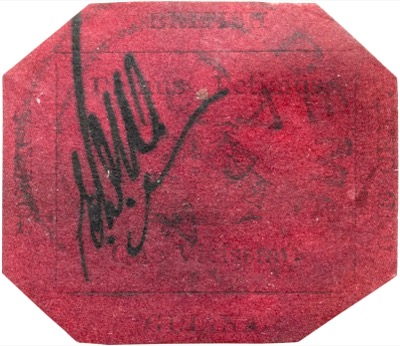
- Chasing famous rarities before learning the basics. Stamps like the Inverted Jenny or the British Guiana 1c magenta are famous precisely because they are exceptions. Learning to correctly identify and grade ordinary stamps is what prepares you to recognise something unusual if it ever crosses your path.
How can you speed up identification as a beginner?
Catalogues remain the backbone of accurate identification — Scott for a US-centric view, Stanley Gibbons for British and Commonwealth material, and Michel for German-language coverage of European issues. Each assigns its own numbering system to the same stamps, so it helps to settle on one early rather than mixing catalogue numbers across a collection.
Alongside a catalogue, a phone camera can help narrow down an unfamiliar stamp quickly. The app is built for exactly this: photograph a stamp and get help identifying the issue, so you can then check condition and specific variety details by hand. This doesn't replace learning to read watermarks, perforations, and printing details yourself, but it removes a lot of the early guesswork about which country or era you're even looking at.
Whatever tools you use, the goal in these first months is the same: build the habit of examining every stamp closely, record what you find, and let your collection's shape emerge from what genuinely interests you rather than from what you think might be valuable.
Try the free stamp scanner
Photograph any stamp and let StampScan identify it and add it to your digital collection.
Get StampScan FreeWhat is the cheapest way to start collecting stamps?
Start with stamps you already have, such as old family letters, or buy inexpensive mixed packets and stockbooks from a stationery or hobby shop. Tongs, a stockbook, and a perforation gauge cost very little and cover most beginner needs before you invest in an album or catalogue.
Do I need to know a stamp's country to start collecting?
No, but it helps quickly. Many stamps show the country name in Latin or local script, and some, like early British issues, show no country name at all because Britain was first to issue stamps. Learning to spot these patterns comes with practice and reference to a country guide.
Should beginners collect by country or by topic?
Either works well. Collecting by country gives structure and a clear catalogue to follow, while topical or thematic collecting, such as trains or aviation, lets you follow personal interest across many countries. Many beginners start with whatever stamps they already own, then decide.
Is it better to collect used or unused stamps?
Both are valid starting points. Unused stamps described as MNH (mint never hinged) or MH (mint hinged) tend to interest collectors focused on condition, while used stamps are often cheaper and show genuine postal history. Beginners can mix both while they decide on a focus.